
I still remember the first time I stepped into Albion, over fifteen years ago. It felt less like booting up a game and more like cracking open a dusty fairy tale book left in an attic—the kind with stained pages and a faint smell of cinnamon. The original Fable wasn’t just an RPG; it was a moral sandbox wrapped in a storybook, where every choice painted visible consequences on your character’s body and the world around you. The horns and halo system turned adolescence into a personal laboratory of consequence, long before most titles dared to blend player agency with narrative identity so intimately. Today, with a new Fable on the horizon (or possibly already in our hands by 2026), I find myself echoing a sentiment that’s been simmering since Lionhead Studios closed its doors a decade ago: Microsoft should remaster the original trilogy before, or alongside, the reboot.
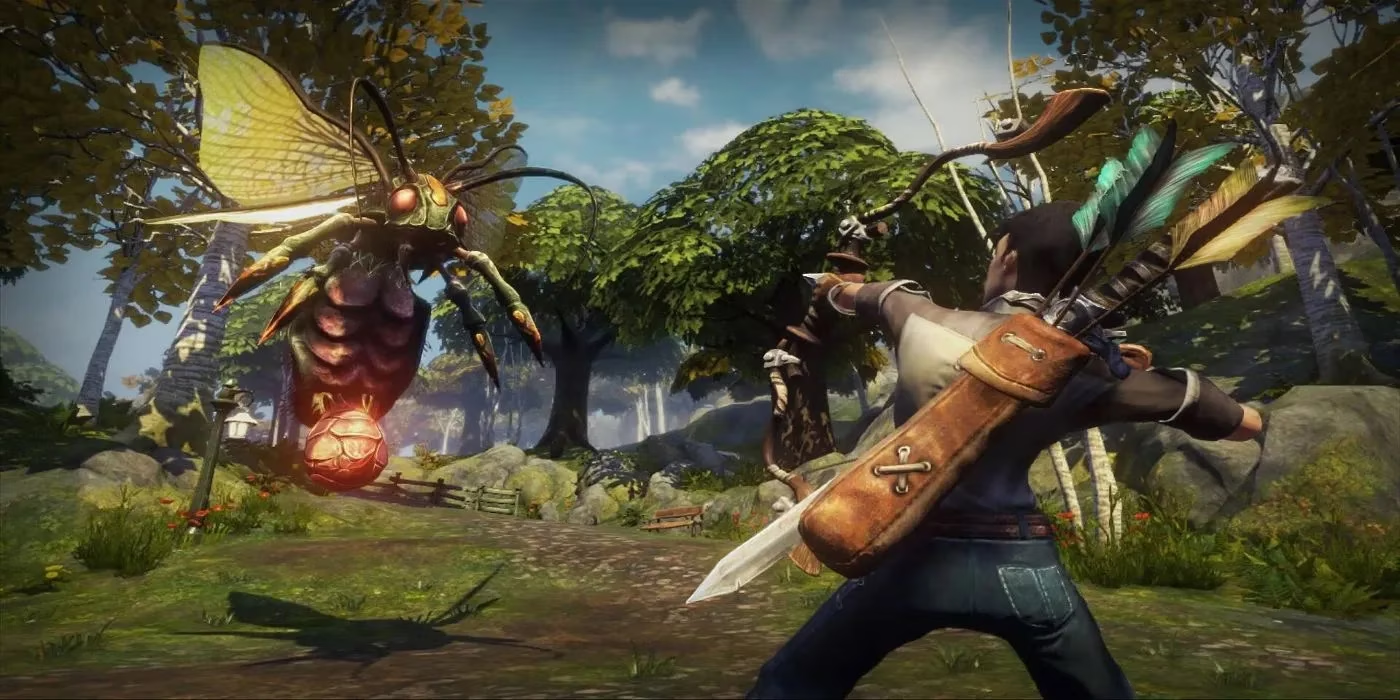
Think of the trilogy as a triptych of aging oil paintings. The colors are still vibrant in memory, but the canvas is cracked, the glaze yellowed. You can’t fully appreciate a modern masterwork without seeing the sketches that made it possible. The oldest Fable is now older than many of today’s gamers, and even Fable 3 has aged beyond a decade. Fable Anniversary was a commendable dust-off, but it too is now seven years past its own release—a restoration in need of restoration. A ground-up remaster collection for current hardware would let the series breathe with 4K textures, higher frame rates, and perhaps finally fix those charming-but-awful control quirks that made the originals feel like guiding a marionette through molasses.
Playing through the trilogy consecutively is like watching a writer evolve from handwritten manuscripts to slightly broken typewriters. The first game’s morality system was binary yet theatrical, a pure fable where eating a live chick or rescuing a villager would literally morph your face into angelic or demonic forms. Fable 2 introduced a canine companion that mirrored your ethical footprint, a mechanic so emotionally resonant that losing that dog for a moment of greed still haunts me more than most scripted deaths in modern blockbusters. And then Fable 3 attempted to scale consequence to kingdom-wide decisions, where being a benevolent ruler meant boring treasury management, but being a tyrant filled coffers at the cost of your people’s trust. These experiments weren’t perfect—they were gloriously, ambitiously flawed—but they form a narrative arc that a newcomer playing the reboot would miss entirely.
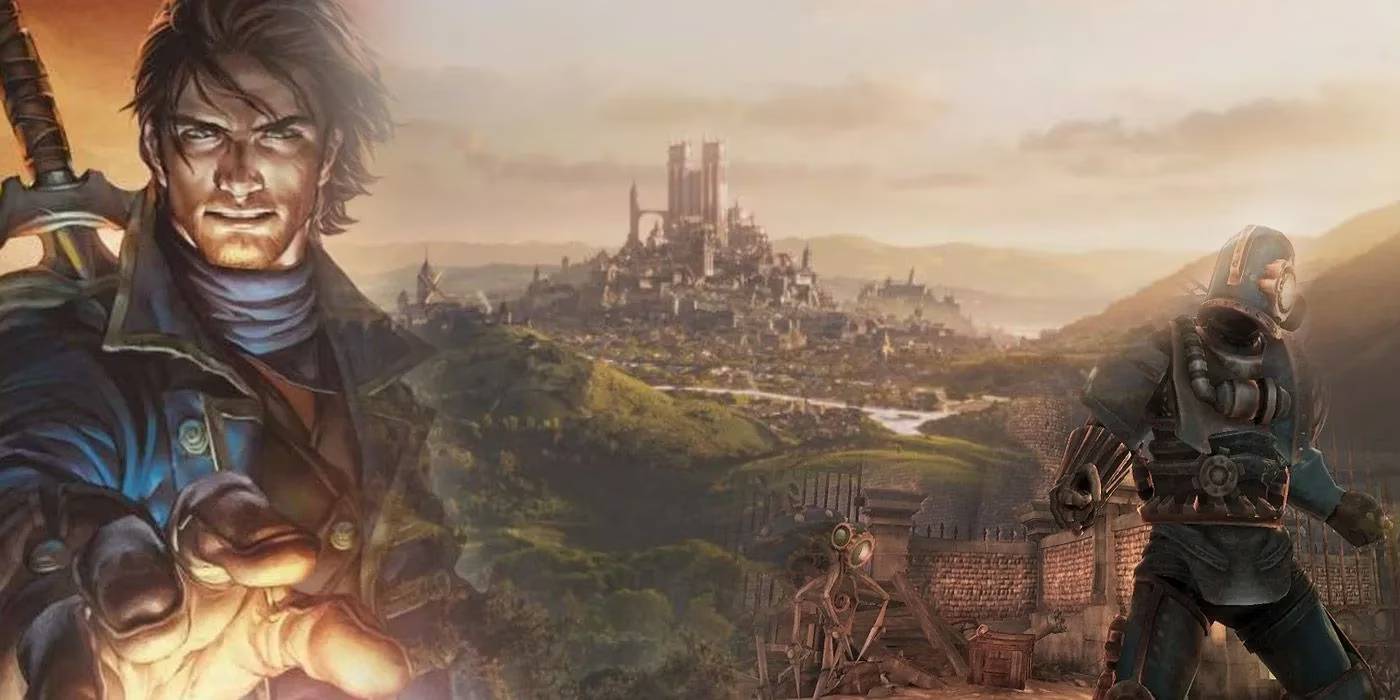
This isn’t just nostalgia speaking; it’s pragmatic. The gaming landscape in 2026 is saturated with remakes and remasters, but few carry the weight of returning to a franchise that’s been dormant for over a decade while a high-stakes revival sits in the oven. A Fable: The Complete Saga—or whatever they’d call it—could function as a liturgical prelude, teaching players the lore of the Guild, the rhythm of the Heroic bloodline, and why the world of Albion deserves a new chapter. Without this context, the reboot risks feeling like a stranger wearing a familiar name tag. Fans like me would buy the collection to relive the first time we kicked a chicken across Oakvale and accidentally became a landlord-tycoon, but new players would finally understand why the series’ storybook soul matters.
I’d compare a trilogy remaster to a sommelier insisting you taste the previous vintages before sipping a new blend—you won’t just recognize the notes; you’ll feel the legacy. Even if Playground Games’ Fable turns out to be a full reboot set in a rebooted timeline, the DNA of choice, humor, and consequence must persist. If the new game ignores the old trilogy’s spirit, it won’t really be Fable; it’ll be an impostor with a glowing trail. Remastering the classics would reassure both camps: developers can point to the original recipe, and players can see where the innovative impulses began.
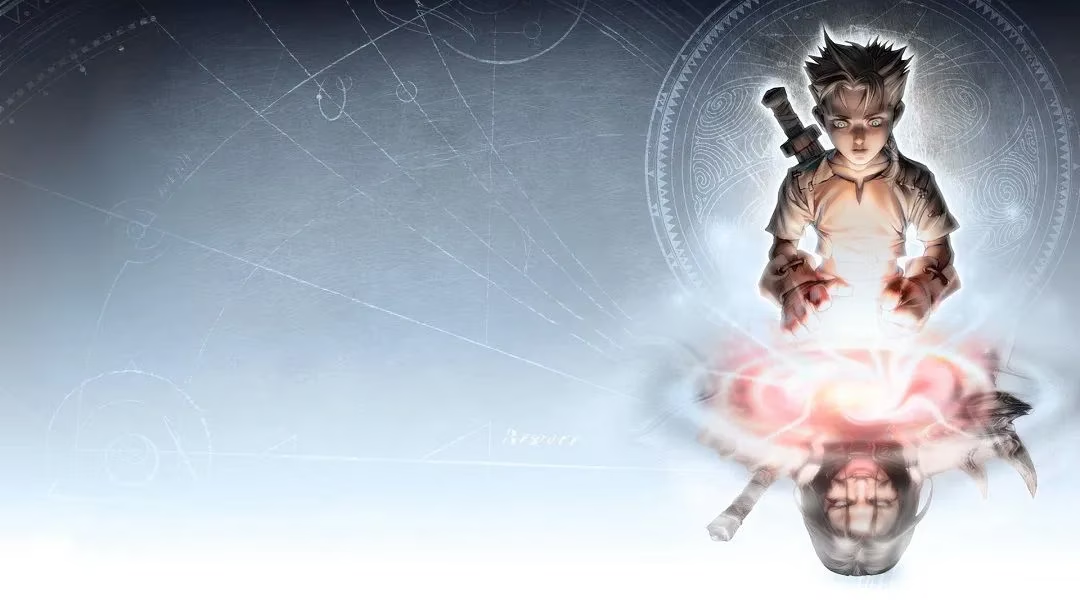
Of course, the financial argument writes itself. Packaging Fable: The Lost Chapters, Fable 2, and Fable 3 together—ideally with all DLC included and maybe a gallery of concept art—would outsell separate releases by attracting completists and curious newcomers alike. The Master Chief Collection proved that a lovingly curated legacy bundle can rehabilitate a franchise’s reputation after stumbles. Imagine a unified launcher that lets you carry some minimal visual continuity across all three games, or a commentary track from the original developers reflecting on their wild ambitions. That kind of preservation isn’t just a product; it’s a museum exhibit you can live in.
Ultimately, this plea isn’t about demanding a replacement for the new Fable—I’m genuinely excited to see what Playground Games crafts. But the absence of the original trilogy on modern consoles is a gap in gaming history that grows more painful each year. Let the old albums spin again before the new track drops. Let Albion’s ancient roads be paved anew, not just for us who remember the first bloom of a morality petal, but for the generation that deserves to see why a story this old can still make you feel like the most powerful, and flawed, hero in the room.