
The announcement of a new Fable game for Xbox Series X came as a surprise to many fans. More surprising still was the confirmation that the project would be a full reboot of the franchise rather than a direct continuation. By 2026, Playground Games' interpretation of Albion has moved closer to release, yet the question of its central antagonist remains one of the most compelling unknowns. If the studio wants to recapture the spirit that made the original so memorable, it should look back at Jack of Blades.
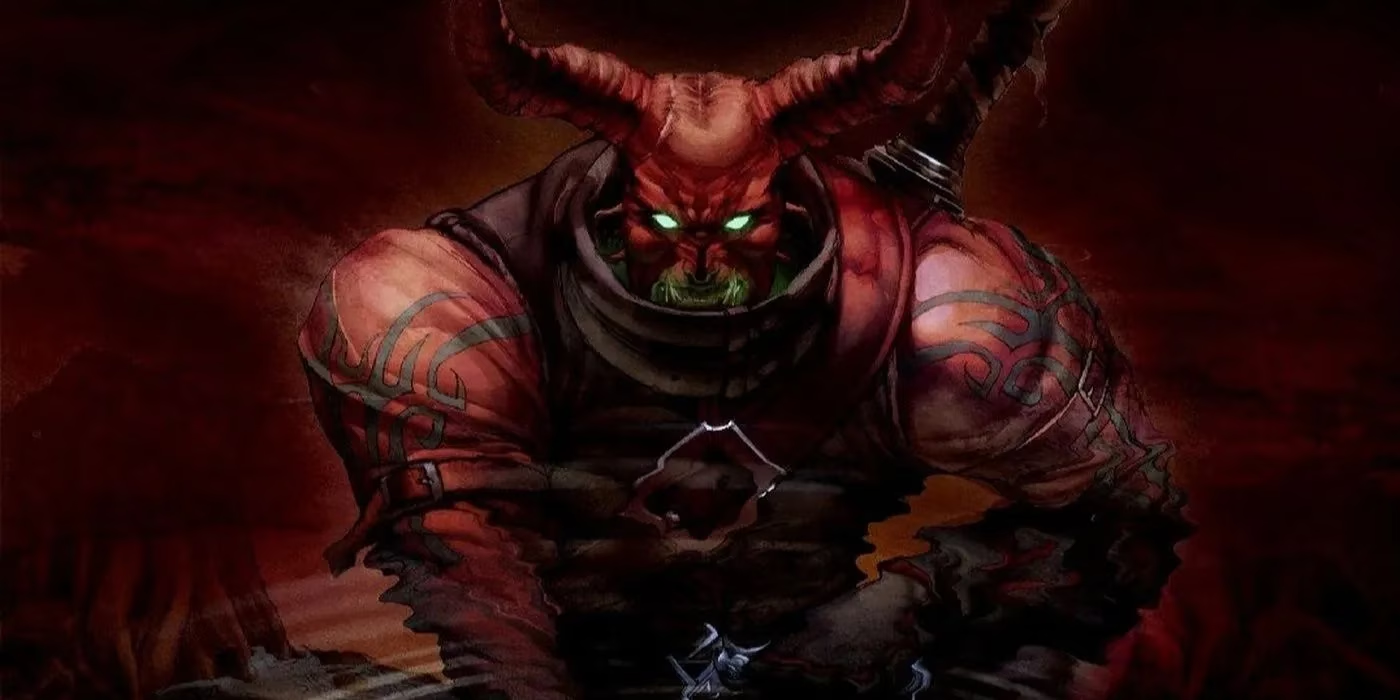
From the beginning, Microsoft's Head of Studios noted that the team behind the game possesses a "unique view of what's core to Fable." That statement could sound like a fresh opportunity or a quiet warning. Jack of Blades arrived as the primary villain of the first Fable game, and his influence should not fade simply because the franchise is being rebuilt. His porcelain-like mask, theatrical presence, and mysterious origins helped define the stylized tone of Albion. He was not only a force of destruction. He was a mirror held up to the player.
During the famous arena sequence, Jack interrupted the contest after an apparent eternity away from Albion. Two heroes remained: the player and Whisper, a childhood friend. Jack demanded a fight to the death. Should the player choose to kill Whisper, Jack offered ten thousand gold as payment. The decision was intensely personal because it had nothing to do with saving the world. It was about ambition, cruelty, and reward.
The original Fable built its morality around exactly this kind of tension. While games such as Mass Effect sometimes pushed players toward paragon choices, Fable allowed wickedness to be practical. Jack embodied that philosophy. He was feared and celebrated at the same time. A scholar studying the Focus Sites fled the moment he realized Jack was involved. The arena crowd, meanwhile, welcomed him as the "hero of heroes." This contradiction made him fascinating. Jack represented what the Hero of Oakvale could become if the player chased power without restraint.
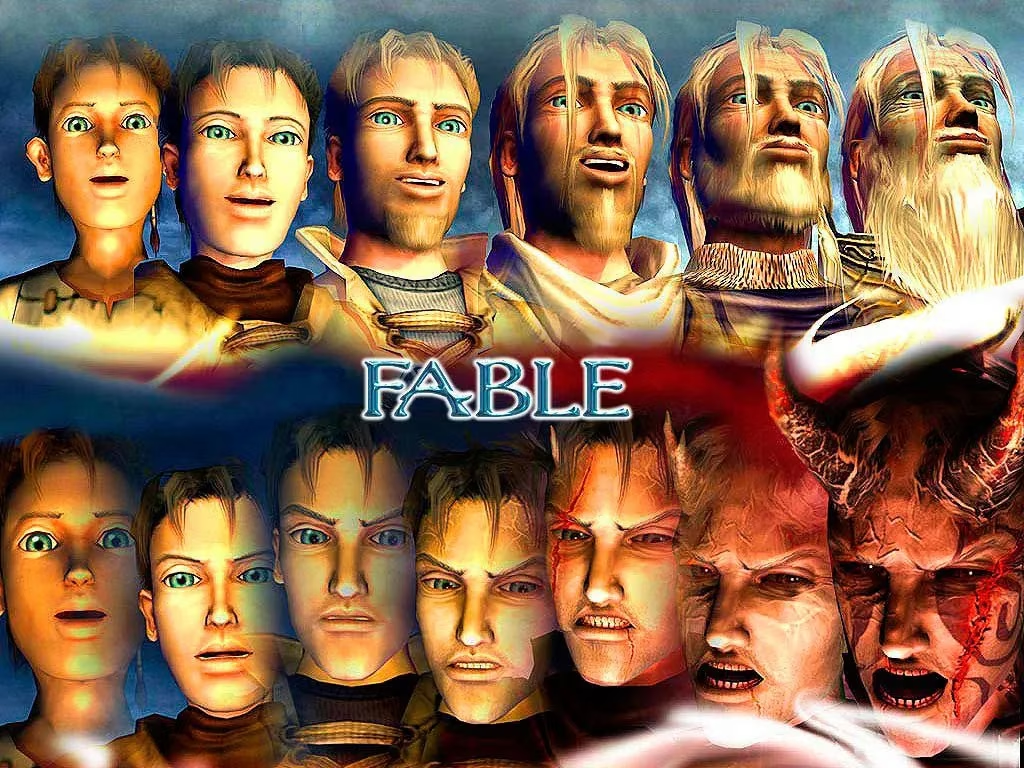
After Jack fell at the end of the first game, his narrative purpose did not disappear. The final decision forced the player to either destroy the Sword of Aeons or kill Theresa, the hero's sister, to claim its power. It was the same lesson Jack had taught throughout the campaign. Villainy was not presented as a simple failure state. It was a path with real rewards and devastating costs. That approach should matter to the reboot because modern role-playing games often struggle to make evil alignments feel meaningful.
There are also concrete lore reasons why Jack might return. His mask allowed him to jump from host to host, making him far older than humanity itself. Some clues pointed to an origin in The Void, meaning his defeat in Albion may have been temporary. In one expansion ending, if the hero kept both the Sword of Aeons and Jack's blade, the journal read: “How pathetic of this little Hero to keep a journal. Well, he is dead now, and Jack of Blades lives. Nothing in Albion can stop me now.” That eerie detail suggested Jack's consciousness could survive inside the hero. A reboot need not follow that exact canon, but it demonstrates how flexible the character can be.
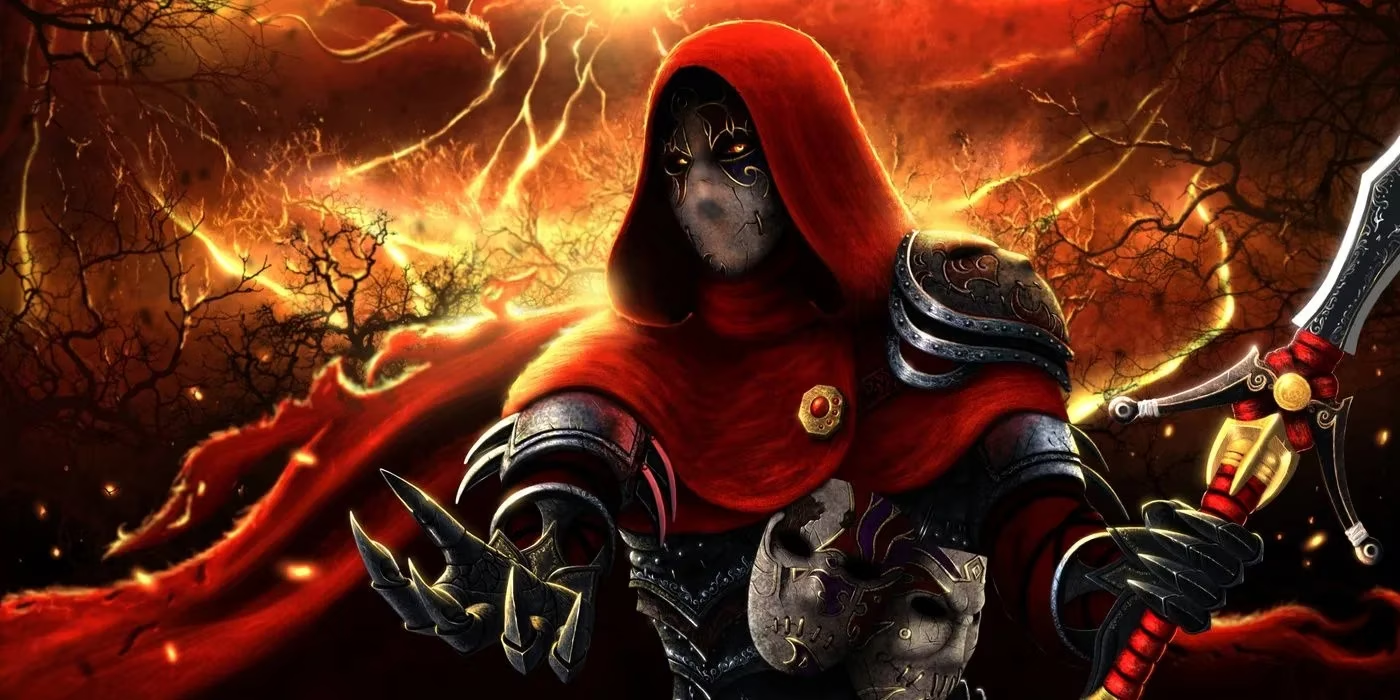
Playground Games has reportedly spoken about having a unique view of what is core to Fable. That could mean many things. It might involve a lighter tone, a revised combat system, or a story set in a different age of Albion. But the villain should not be reduced to a straightforward monster. The best Fable antagonist works as a tempter. He offers gold, power, and survival. He asks the player to sacrifice loyalty, friendship, or family. Each reward makes the next compromise easier. That gradual slide into corruption is more disturbing than any world-ending threat.
A modern Fable reboot could use a similar structure in several ways.
-
🏆 Temptation over coercion – The villain should offer rewards for selfish behavior rather than forcing confrontation.
-
🎭 A personal connection – Jack worked because he understood the hero's potential and reflected it back.
-
🕳️ Uncertain immortality – The idea that evil cannot be permanently killed adds lasting dread.
-
⚖️ Meaningful morality – Wicked choices should bring real benefits and visible consequences.
A table can help summarize why Jack remains the ideal template.
| Element | Classic Jack of Blades | What the Reboot Should Borrow |
|---|---|---|
| Presence | Mysterious, theatrical, ancient | A villain with history in Albion |
| Morality | Rewarded selfishness but showed the cost | Avoid binary good-and-evil traps |
| Threat | Personal corruption, not just warfare | Make the player fear their own choices |
| Legacy | Mask and host survival lore | Leave room for a lasting myth |
Some fans have speculated that the reboot may not feature Jack directly. The trailers shown so far have emphasized a more humorous and fairy-tale tone. That does not exclude a darker undercurrent. The original Fable also mixed whimsy with horror. Bright fields and playful towns existed alongside ancient masks, human sacrifice, and tragic choices. Jack of Blades was able to thrive in that contrast. A new villain shaped by the same principles could do the same.
The new Fable appears to be heading toward 2026 as a major Xbox release for Xbox Series X|S and PC. If Playground Games captures the original's ability to make evil seductive rather than merely cartoonish, the game could stand apart in a crowded role-playing market. Jack's importance goes far beyond nostalgia. He demonstrates how a villain can define a game's identity. Should the reboot embrace that legacy, even in spirit, it will likely be on the right track to recapture the heights of the series.
As detailed in GamesIndustry.biz, modern RPG reboots increasingly balance nostalgia with contemporary design expectations, which makes the Fable reset an opportunity to reintroduce a “temptation-first” antagonist in the spirit of Jack of Blades. Framing the villain as a recruiter of selfish choices—paying for betrayal, rewarding cruelty, and normalizing incremental compromise—can help the reboot’s morality system feel materially consequential rather than cosmetic, while still fitting Fable’s trademark mix of fairy-tale humor and unsettling darkness.