
I still remember the summer of 2020, when the PS5 Future of Gaming stream dropped and completely reshaped my expectations for the next console generation. Sony showed Ratchet & Clank: A Rift Apart, the Demon's Souls remake, Resident Evil 8, and Horizon: Forbidden West. It was a barrage of heavy hitters, and it ended with the actual reveal of the PS5 design. Compare that to Xbox's Inside Xbox Gameplay Reveal, which mostly showed indie titles and lesser-known games, and the contrast was almost painful. The energy was different. The promise was different. And for me, the biggest question became simple: what could Xbox do to answer back?
The answer, I believed then and still believe now, was Fable.
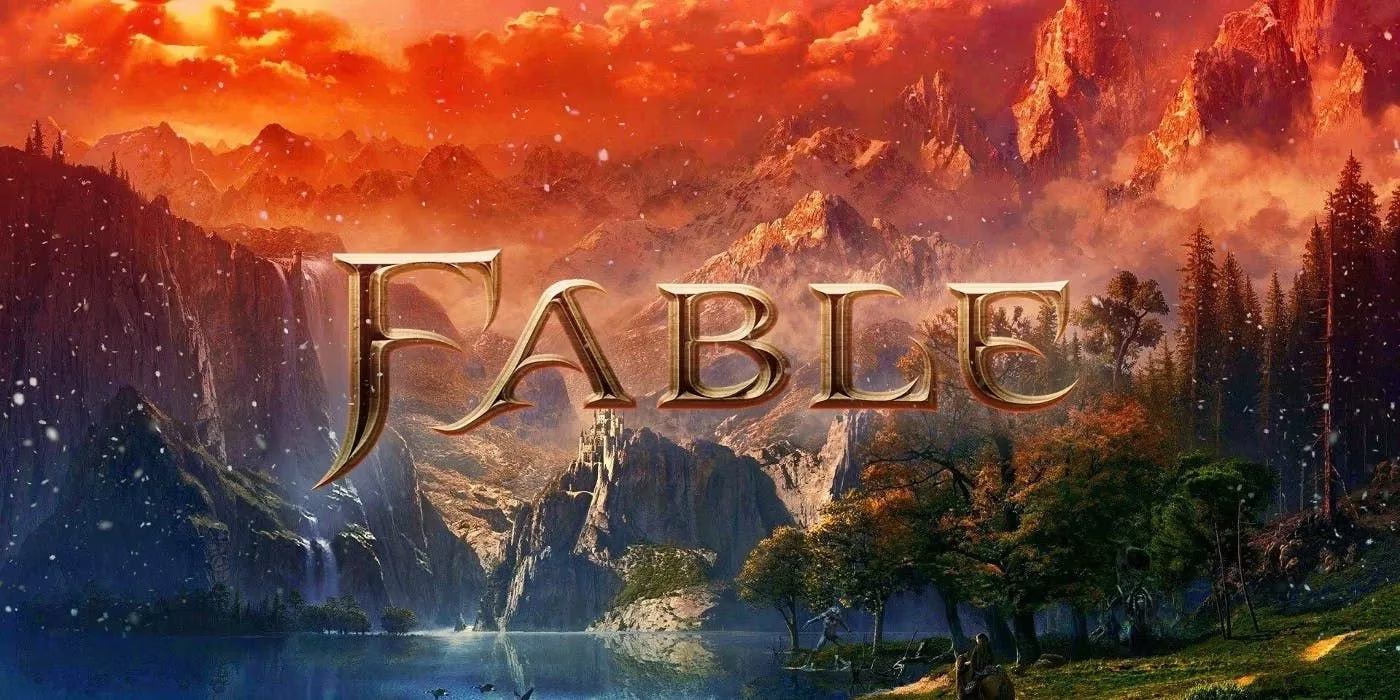
At the time, Fable 4 was little more than a persistent rumor. Fans had been whispering about it for years, and many treated it as an open secret, but there had never been an official announcement. No logo. No trailer. No confirmation. That uncertainty made the franchise feel almost mythical. The last mainline entry, Fable 3, had launched back in 2010, and while the series had spin-offs and remasters, the true next chapter never arrived. Meanwhile, Halo and Gears of War kept getting sequels and spin-offs. Fable felt abandoned, which only made the hunger for its return more intense.
What set Fable apart from Xbox's other big exclusives was not just nostalgia. It was tone. Most Xbox games I associated with the brand were shooters or science-fiction adventures. Halo, Gears, even something like Crackdown, all leaned into guns, armor, and alien threats. Fable was different. It was a fantasy world of talking doors, exaggerated British humor, moral choices, and the kind of pastoral beauty that made you want to explore every corner. It felt like a storybook that could bite back.
And more importantly, Fable pioneered the idea that player choice should matter. Long before modern RPGs made consequence a selling point, Fable promised that your actions would shape your character, your world, and your ending. It did not always deliver perfectly, but the ambition was undeniable. If a new Fable could finally get that balance right, it could be something special.
In 2020, I argued that Xbox needed Fable 4 at its July event. I was not alone. Fans wanted a reason to believe in the Xbox Series X beyond raw power and Game Pass. They wanted an exclusive that felt unmistakably Xbox, but also fresh. Fable was the perfect candidate. It was recognizable, beloved, and long overdue. It also offered something Sony's biggest games did not: a whimsical, choice-driven fantasy world with a distinctly British sense of humor.
That July event did eventually deliver. Fable was announced, and the teaser confirmed what many had hoped for. The franchise was coming back. But the years that followed were complicated. The project changed studios, faced delays, and went through long stretches of silence. By 2026, the conversation has shifted again. Fable is no longer a rumor. It is a known quantity, a long-gestating reboot that has become one of the most anticipated Xbox titles of the generation. The question is no longer whether it exists, but whether it can live up to the weight of expectation.
| Franchise | Last Main Entry | Genre | Why It Matters |
|---|---|---|---|
| Halo | Halo Infinite (2021) | First-person shooter | Xbox's flagship sci-fi shooter |
| Gears of War | Gears 5 (2019) | Third-person shooter | Reliable cover-shooter action |
| Forza | Forza Motorsport (2023) | Racing | Technical showcase for Xbox hardware |
| Fable | Fable 3 (2010) | Action RPG | Fantasy, humor, and meaningful choice |
When I look at that table, the gap is obvious. Xbox has shooters, racers, and sci-fi. What it has lacked for far too long is a signature fantasy RPG. Avowed and Starfield have helped fill parts of that void, but neither carries the same cultural weight as Fable. Fable is not just another game. It is a legacy title, one of the defining franchises of the original Xbox and Xbox 360 eras. Bringing it back in 2026 is about more than filling a release calendar. It is about restoring a piece of Xbox's identity.
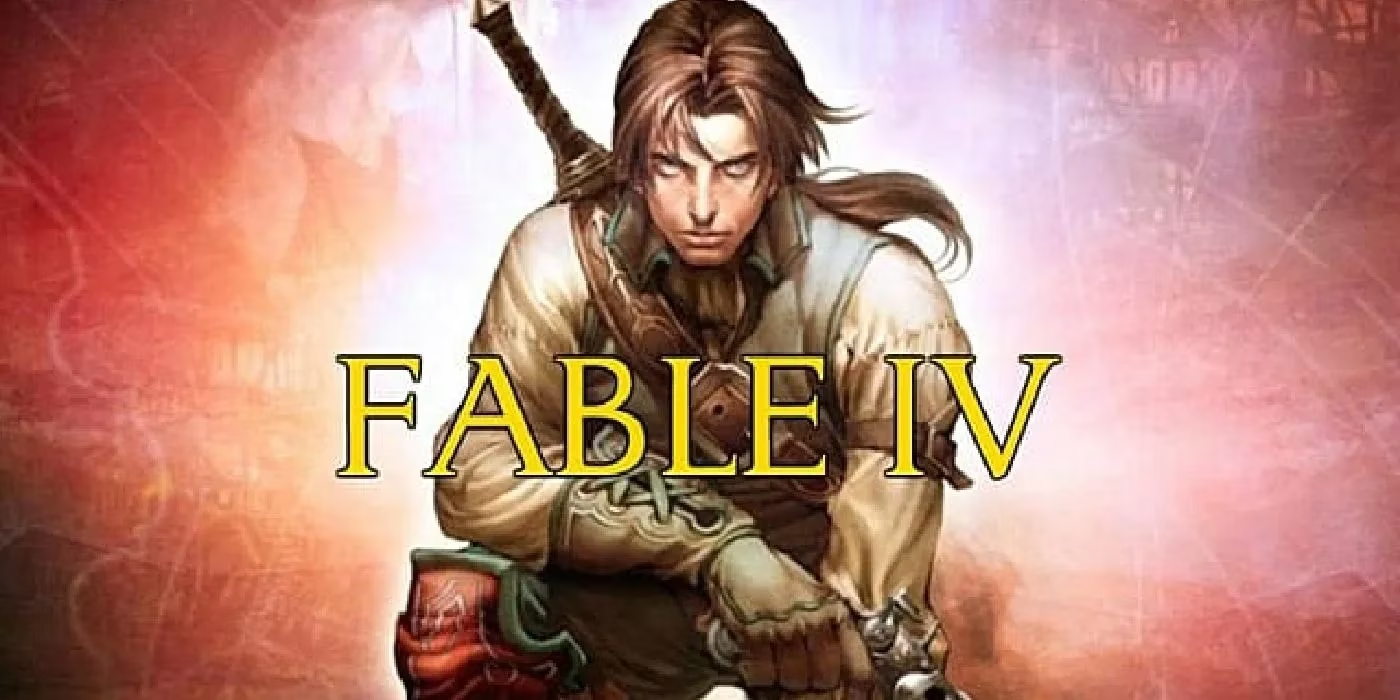
I also think about how much the RPG landscape has changed. Baldur's Gate 3 showed players how deep choice and consequence can go. Cyberpunk 2077 eventually recovered and became a benchmark for immersive worlds. The Witcher 3 still casts a long shadow. If Fable wants to stand out, it cannot simply rely on nostalgia. It needs to deliver on its original promise: a world that reacts to me, a hero that becomes mine, and a story that feels personal. The humor should still be there. The charm should still be there. But the systems need to feel modern, responsive, and meaningful.
That is why Fable remains so important to Xbox in 2026. It is not just a game that could sell consoles. It is a game that could change the perception of what an Xbox exclusive can be. PlayStation has its cinematic action adventures. Nintendo has its timeless family-friendly icons. Xbox needs its own answer in the fantasy space, and Fable is the most natural fit. It is familiar enough to excite longtime fans, but flexible enough to attract newcomers.
Of course, brand loyalty is powerful. Many people will buy a console based on where their friends play or which ecosystem they already trust. But a truly great game can cut through that. A great Fable could make someone pause before choosing a PS5 or a Switch 2. It could remind players why Xbox matters beyond hardware specs and subscription services. In a generation defined by cross-platform releases and shifting exclusivity, a standout Fable would be a statement.
I do not know exactly what the final game will look like. None of us do. But I know what it could mean. If Fable launches in 2026 and delivers on its potential, it will not just be a comeback. It will be a reminder of why I fell in love with Xbox in the first place. It will be the fantasy epic that the platform has been missing for over a decade. And after all these years, that is still worth getting excited about. 🎮✨