
I’ll be honest: when the Perfect Dark logo flashed at The Game Awards 2020, I actually leaned forward on my couch. It wasn’t just nostalgia—it was recognition. Microsoft was finally doing something I’d wanted for years: treating its older franchises like they matter.
A lot of people forget how weird 2020 felt for Xbox fans. The Series X was launching, but the big games weren’t exactly lined up. Halo Infinite had been pushed, Avowed felt forever away, and many of us were wondering why Sony seemed to have so many single-player heavy hitters while Microsoft kept relying on Game Pass value.
That’s why Fable and Perfect Dark meant something bigger than a simple reveal. Fable, from Playground Games, told us Microsoft wanted a beloved RPG back. Perfect Dark, from The Initiative, told us it wasn’t a one-off. Both franchises had been silent for years, yet they got splashy reveals instead of quiet remasters. That pattern felt deliberate.
I’m not saying Xbox didn’t have games. It had plenty. But “plenty of games” isn’t the same as a recognizable identity. Sony had built an identity around blockbuster story-driven exclusives like God of War, Horizon Zero Dawn, and Marvel’s Spider-Man. Microsoft needed its own answer. Fable and Perfect Dark aren’t copies—they’re totally different genres—but together they start to sketch an Xbox library that feels more personal.
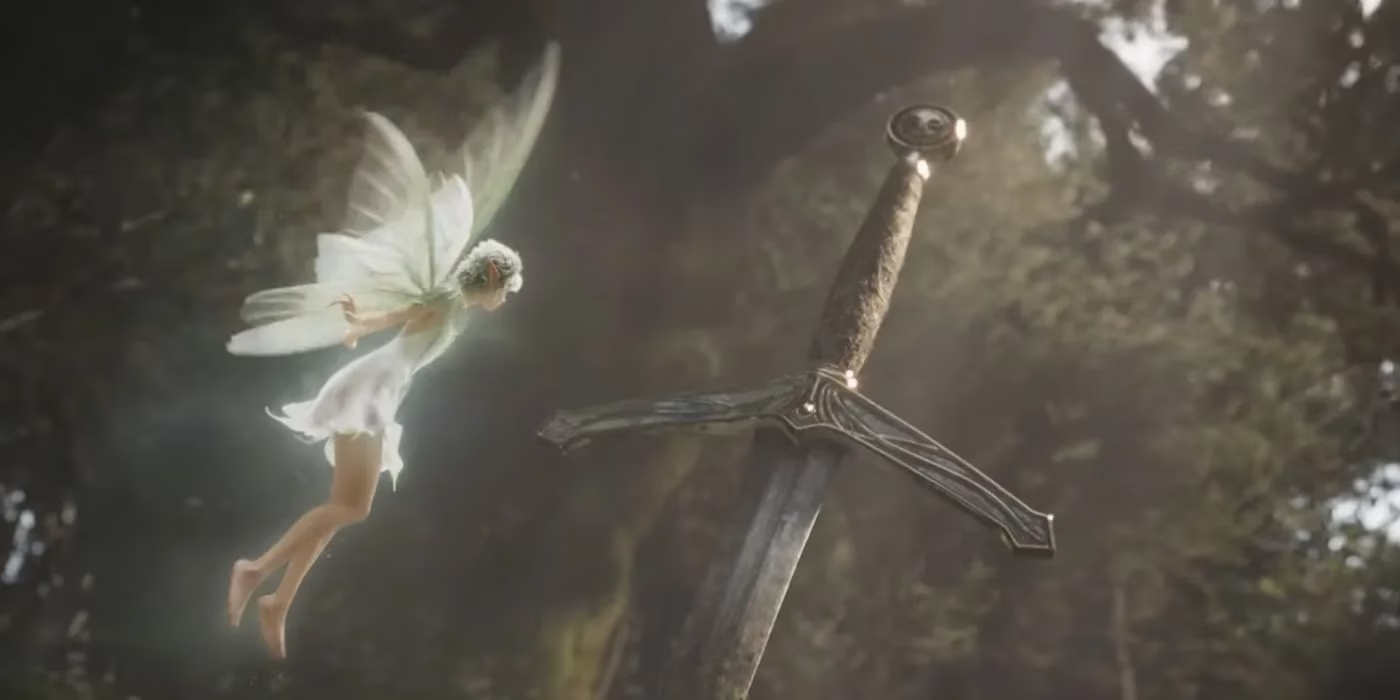
Now, in 2026, I still think about that pressure. The new Fable has to satisfy fans who grew up with Albion’s weird humor, moral choices, and British charm. Perfect Dark has to modernize Joanna Dark without losing the spy-thriller edge of the original. Those are tall orders. If either falls flat, it won’t just hurt that franchise—it’ll make Microsoft’s whole revival strategy feel less credible.
The other piece is Bethesda. Microsoft’s acquisition gave Xbox direct access to The Elder Scrolls, Fallout, Doom, and other massive names. That was a power move, but it also raised expectations. If The Elder Scrolls 6 is years out, games like Fable and Perfect Dark become the face of Xbox’s first-party ambition in the meantime. They have to do a lot of heavy lifting.
There’s also a bigger list of dormant IPs I’d love to see get the same treatment. Banjo-Kazooie showed up in Super Smash Bros. Ultimate and then went quiet again. Killer Instinct had a successful soft reboot but hasn’t been pushed as a mainline event. Even older Rare properties or Activision Blizzard titles could become Xbox exclusives with the right team. Fable and Perfect Dark are the test cases. If they work, the doors open wider.
Let’s be real: Game Pass is an incredible deal. I use it constantly. But Game Pass shouldn’t be the only reason someone buys an Xbox. A console becomes memorable when you associate it with specific games—Halo on the original Xbox, Fable on the 360, Perfect Dark on the N64 even if it later lived under Microsoft. Series X needs its own versions of that feeling.
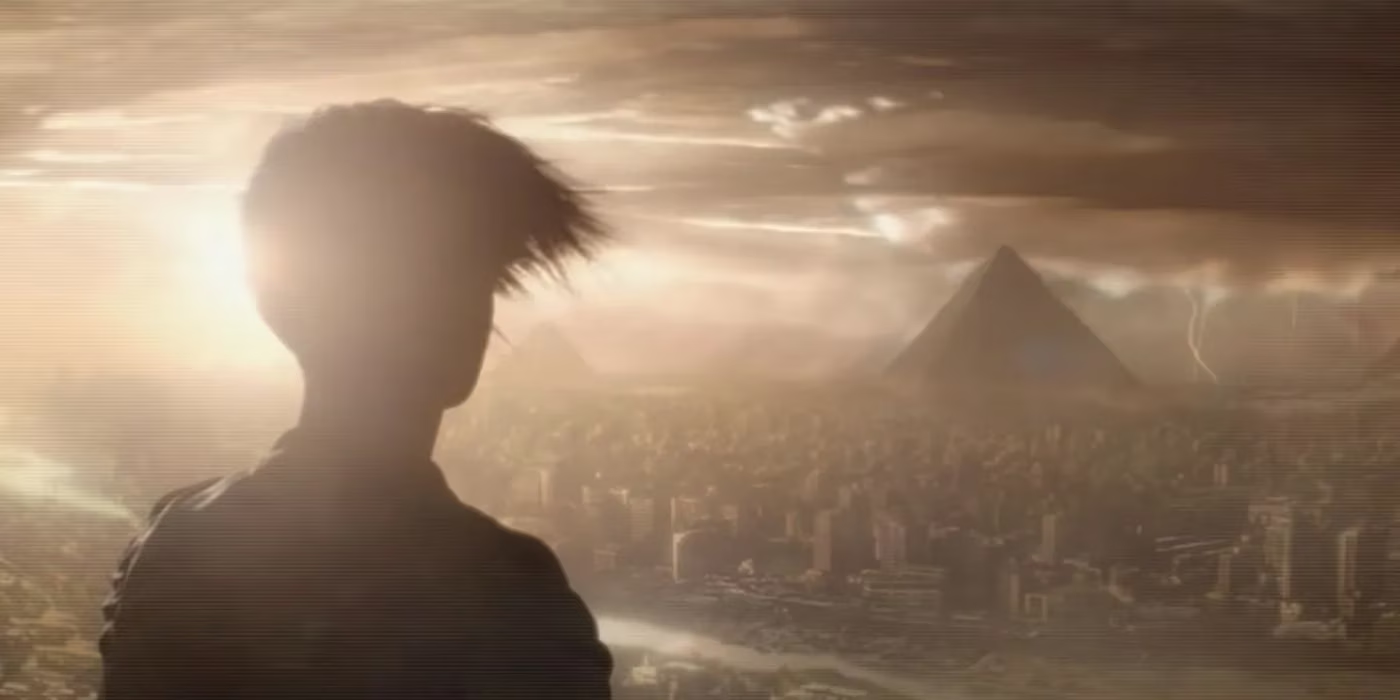
If Microsoft commits, these revivals could do more than just sell consoles. They could change how people talk about Xbox. Instead of “what’s coming to Game Pass?” we might finally ask “what great Xbox game do I want to play next?” That’s the identity shift I’ve been waiting for.
Fable and Perfect Dark are still in development as of 2026, and details remain thinner than I’d like. But the existence of both projects says something. Microsoft isn’t just renting attention with big third-party deals—it’s investing in its own worlds. For a long-time Xbox player like me, that’s exactly the right direction.