
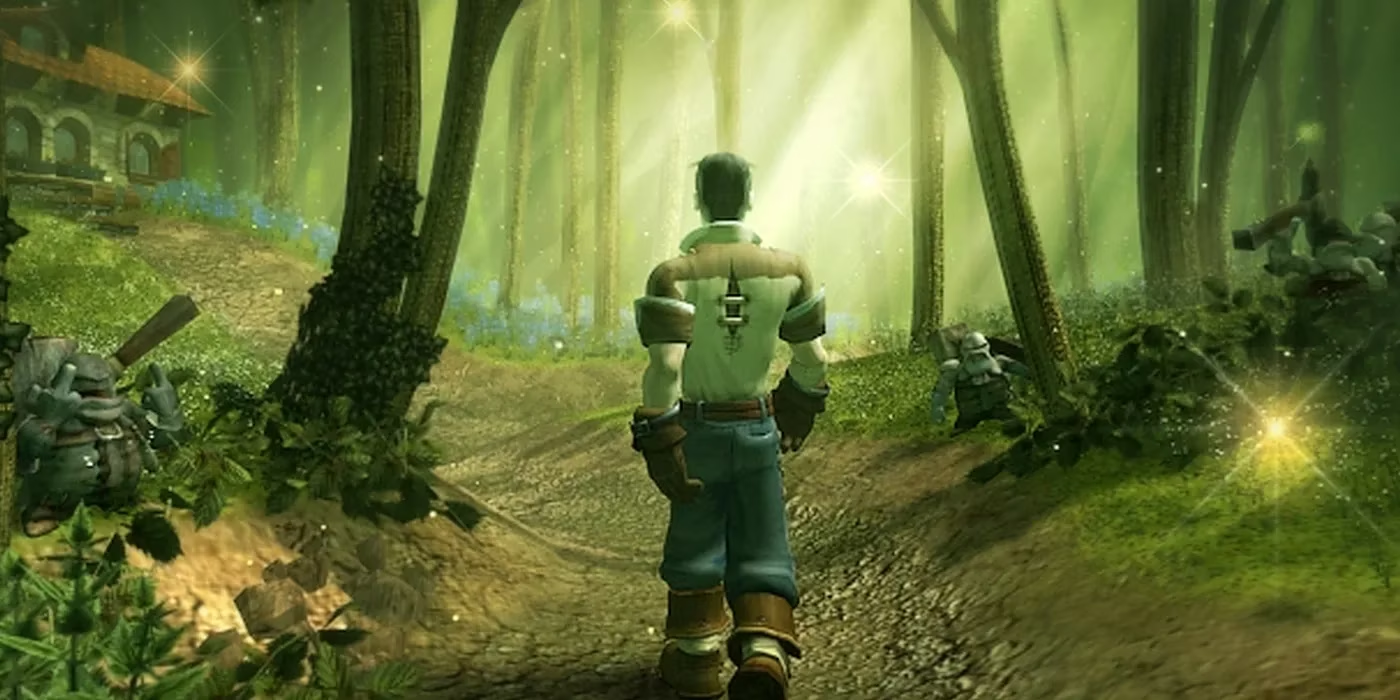
Nobody really knows what kind of fairy tale the new Fable is trying to spin. It’s been years since the teaser, and Playground Games is still keeping their cards so close to the chest that even Albion’s heroes couldn’t pickpocket a single hint. The original trilogy took players from muddy medieval quests all the way to industrial smog, and now the series is being reborn—not remastered or remade, but genuinely, bravely rebooted. That's a terrifyingly blank page, and the studio knows it. So when they went scouting for storytelling talent, they didn’t hire someone to just sprinkle more fairy dust on chickens. They picked Anna Megill, a senior writer from Control. And if that doesn’t make a gamer’s ears perk up, nothing will.
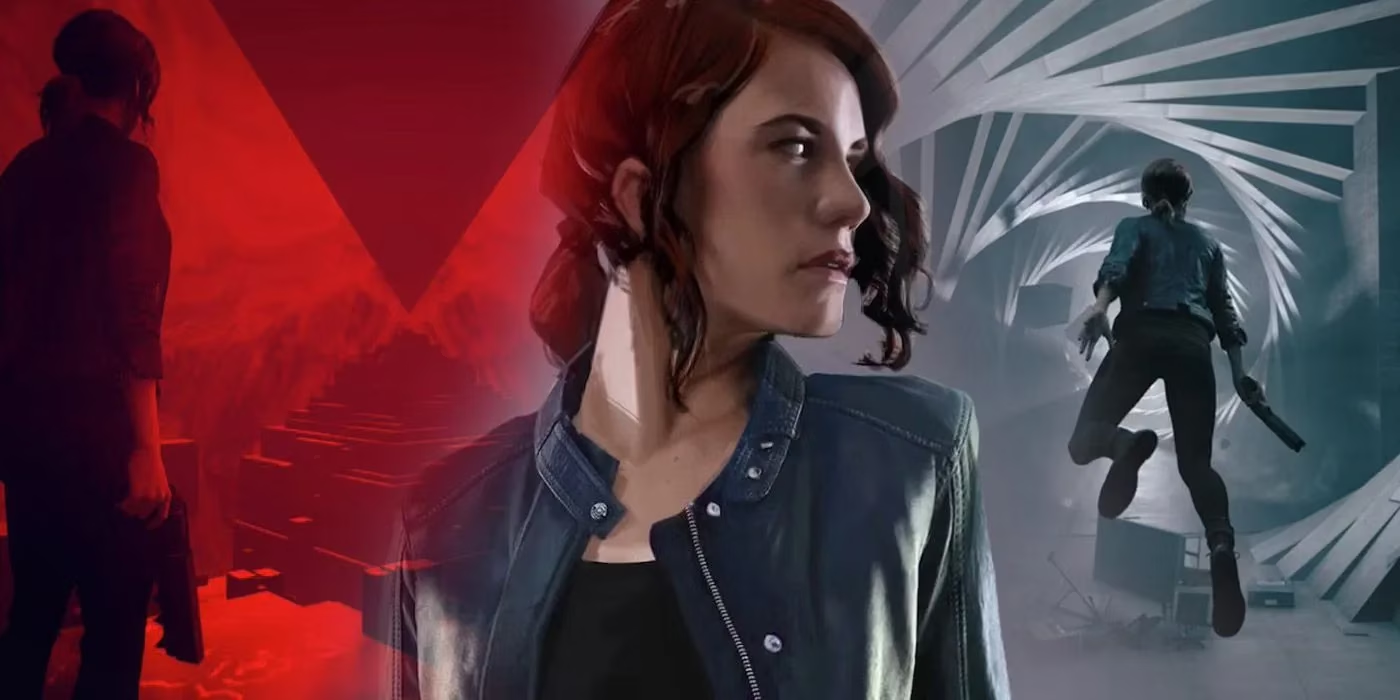
Control is the weird kid at the fantasy party who shows up in a suit made of shifting concrete and somehow makes everyone else look underdressed. Its worldbuilding is so lovingly detailed that even the filing cabinets feel haunted—and that’s exactly what Playground should be scribbling down in a notebook. In Control, the Federal Bureau of Control doesn’t just fight one big spooky monster. Oh no. There are telepathic floppy disks, an interdimensional mold that’s mildly offended by your presence, and a janitor who might actually be a god. The Bureau’s HQ, the Oldest House, is a brutalist fever dream where every corridor has a secret and every secret has teeth. That’s not just set dressing; it’s narrative ambition. The world asks, “What if bureaucracy met cosmic horror?” and then answers with a straight face. Fans dig into every collectible because they’re afraid of missing something—and that’s the magic that a rebooted Fable desperately needs to bottle.
Let’s be real here—Albion has always been charming, but its fantasy often felt like a well‑loved storybook, not a living, breathing myth. Control, on the other hand, layers its oddities so deep that players still debate whether a certain rubber duck is a god or just a duck. Playing Control, you never quite know if the next light switch will plunge you into an astral plane. That sense of constant, unsettling discovery is something Fable could feast on. Imagine wandering the Bowerstone streets, and instead of just kicking chickens, you stumble upon a note hinting that the local tavern owner vanished because he touched a mirror that didn’t reflect him. No world‑ending quest marker, just a whisper of something wrong. That’s the Control influence whispering in the background, nudging the player to stop fast‑traveling and start poking at the edges of the map.
Now, plug that into Fable’s rusty machinery. The morality system was always the franchise’s crown jewel, but it used to be a bit… black and white. Angelic halo, demonic horns, done. But what if the world remembered your choices in a more Control‑like way? Suppose you let a village burn just to pocket a legendary sword. Months later (in real time, because 2026 games love living worlds), a survivor’s journal spawns in a hero guild library, detailing the fire—and if your character reads it, they gain a permanent scar, not a stat penalty, but a reminder. The world wouldn’t just label you evil; it would grieve. That’s environmental storytelling with a conscience, and it’s exactly the sort of elegant knife twist that Control’s writing team would carve. Actually, imagine scattered documents that only appear based on your renown: a heroic warrior finds tales of their bravery in temple crypts, while a villain discovers wanted posters with a child’s drawing of them as a monster. Little details, huge emotional payload.
And here’s the cheeky part—Playground doesn’t need to copy the Bureau’s floating bodies or shape‑shifting gun outright. Instead, they can borrow the quiet, creeping dread that something vast is pulling strings behind Albion’s cheerful façade. The original games hinted at a corrupted Court and shadowy factions; a reboot with Control’s M.O. might weave in a hidden pantheon that only a handful of mad prophets whisper about. Picture a quest where you find a door in a cave that wasn’t there yesterday, and stepping through it feels less like a dungeon crawl and more like a bad decision you can’t take back. No dramatic boss logo, just a slow, dawning horror that you’ve entered a place where the usual morality arrows don’t point anywhere.
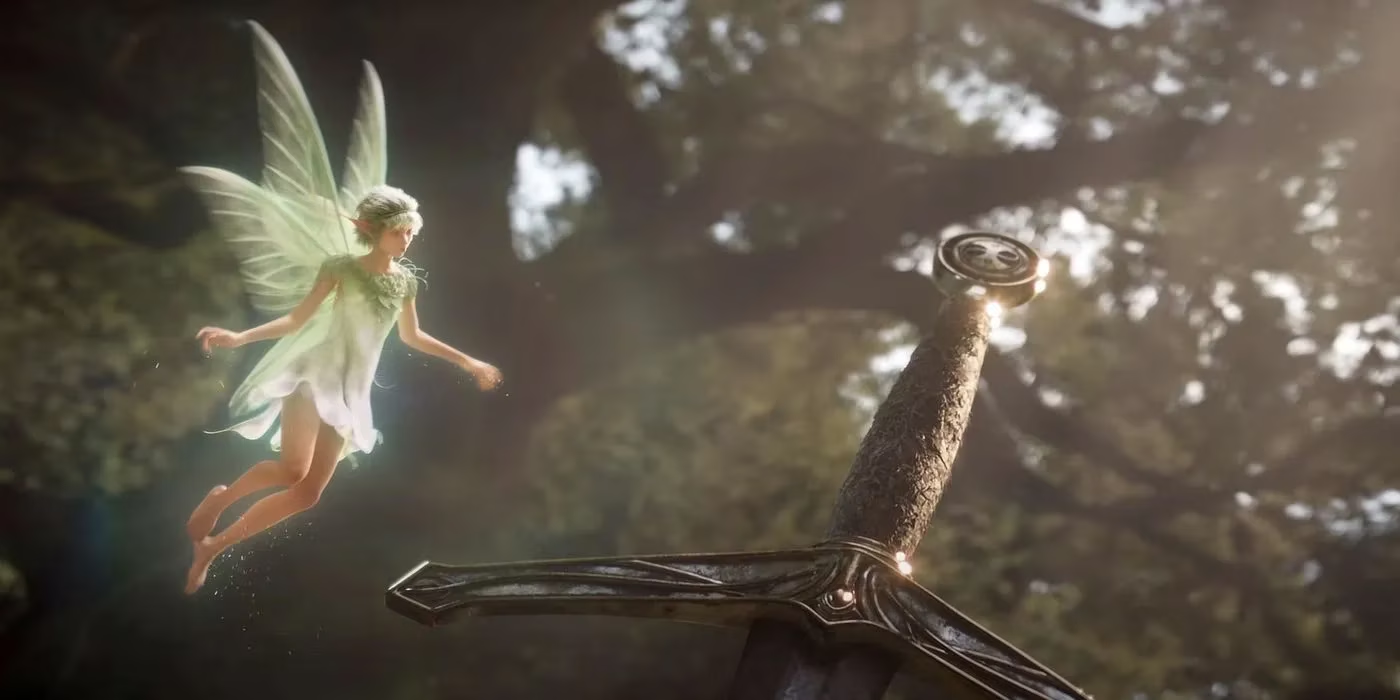
Of course, 2026 and we’re still squinting at teaser trailers trying to tell if that mushroom explodes in a funny way or a terrifying way. The secrecy is almost a punchline at this point, but that’s fine. The hiring choices suggest that Playground Games isn’t just chasing nostalgia—they want to build something with weight. They’ve seen how Control made a shape‑shifting office building more memorable than a dozen generic fantasy kingdoms, and they’re bringing in the architects. Maybe Albion will still have the jokes, the accents, and the chicken‑kicking, but underneath it, there’s a new layer of weird waiting to uncurl. Something like the Hiss, a quiet corruption that doesn’t just turn people evil but rewrites them. Something that might ask the Hero of Oakvale’s descendant a very uncomfortable question: “What if you’re not the main character anymore?” If Fable can answer that with half the style of Control, the decade wait will have been worth every second.