
Is the mantle of the hero, with its shining armor and unwavering virtue, a garment that has grown heavy and predictable? In a world of interactive fiction where the righteous path is so often paved with golden rewards and narrative applause, does a shadowy whisper ever tempt the player to stray? What if, for once, the game not only permitted the transgression but celebrated it with tangible, tantalizing rewards? The digital realm, freed from the shackles of earthly consequence, becomes the perfect canvas for exploring the allure of the forbidden, the power of the corrupt, and the strangely liberating joy of being, quite simply, evil. This is not merely about narrative divergence; it is about systems that recognize and incentivize moral decay, offering treasures and powers hidden from those constrained by conscience.
10. Crusader Kings: The Blood-Soaked Tapestry of Dynasty
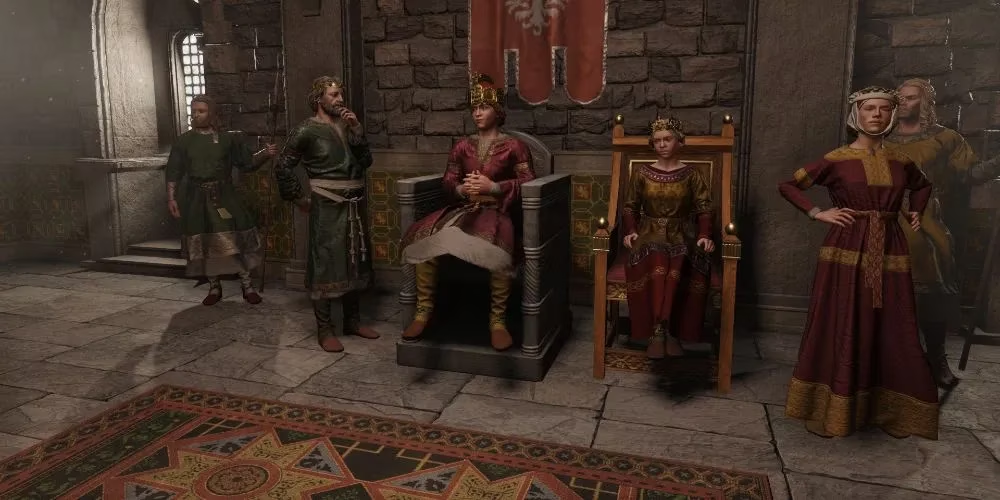
Does history remember the benevolent or the effective? Crusader Kings strips away romanticized chivalry to reveal the brutal, pragmatic heart of medieval power. Here, empire-building is a blood sport. The game presents a stark choice: will you patiently cultivate alliances and hope for fortunate inheritances, or will you seize destiny with a poisoned chalice and a forged claim? Murdering a rival to absorb their lands, imprisoning a troublesome heir, or plunging a realm into civil war for personal gain—these are not narrative set-pieces but core strategic tools. The reward is not a pat on the back from a digital deity, but a sprawling, multi-generational dynasty built on a foundation of cunning and cruelty. No empire, the game whispers, was ever built on bloodless deeds. The true victory lies in seeing your family's crest dominate the map, a testament to generations of ruthless ambition.
9. Papers, Please: The Bureaucracy of Broken Souls
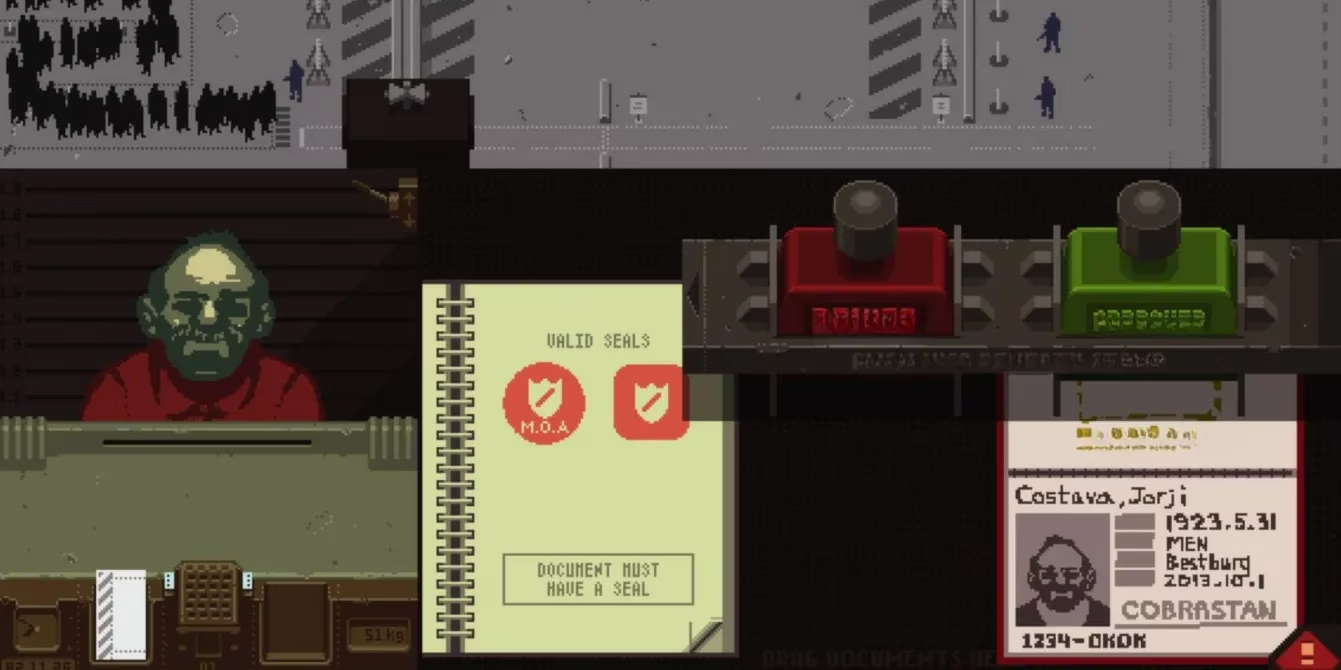
Where is the line between duty and humanity? Papers, Please transforms moral compromise into a chillingly mundane routine. As a border inspector for the glorious state of Arstotzka, your power is absolute yet petty. The "reward" for evil here is starkly materialistic: a warmer apartment, medicine for your sick child, food on the table. Each decision is a transaction. That desperate refugee with forged papers—turning them away might earn you a citation, but letting them through could mean your family goes hungry. The game masterfully reframes villainy not as grand, moustache-twirling malice, but as the slow, soul-crushing erosion of empathy for survival's sake. The ultimate reward? Perhaps just making it through another day in a system designed to grind compassion into dust, your conscience a currency spent to keep the cold at bay.
8. Vampyr: The Physician's Predatory Dilemma
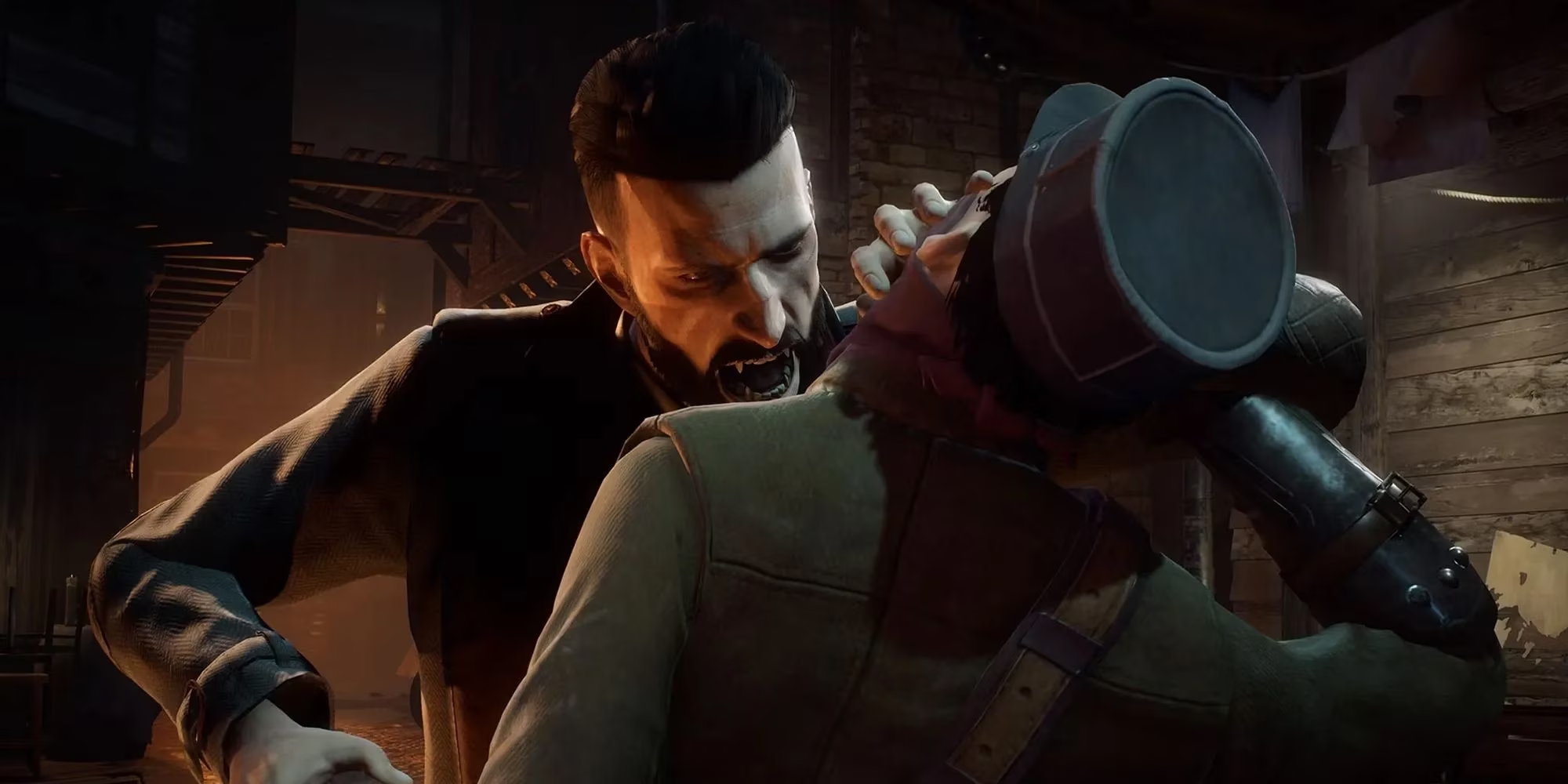
Can a monster heal? Vampyr presents a delicious, gothic paradox. You are Dr. Jonathan Reid, a man sworn to preserve life, now cursed with a thirst that can only be slaked by ending it. The game's central mechanic is a brutal economy: the citizens of plague-ridden London are your patients and your potential sustenance. Nourishing yourself on the blood of the wicked or the sickly might seem pragmatic, even merciful. Each life consumed directly fuels your vampiric powers, making you stronger, faster, deadlier. The "good" path—abstaining—leaves you frail, struggling against the night's horrors. The evil path offers intoxicating power. Why merely heal a scourge when you can devour him? The game asks: if you have the power to decide who is worthy of life, does that make you a god or a demon? The reward for embracing the latter is the visceral thrill of supremacy, of feeling the very lifeblood of London empower your every move.
7. Tyranny: Serving the Lesser Evil in a Broken World
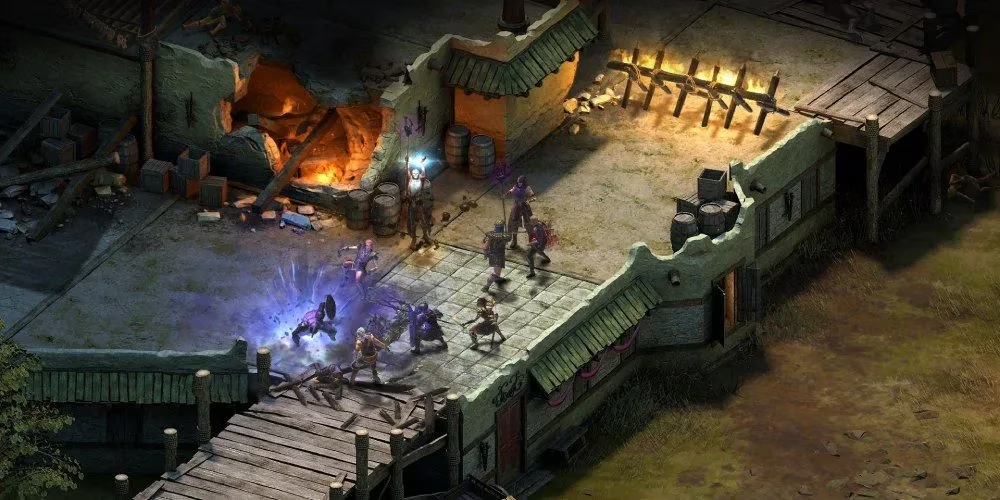
What does "good" mean when the world has already been conquered by evil? In Tyranny, you begin not as a rebel, but as a high-ranking enforcer for Kyros, the Overlord who has already won. There is no grand rebellion to spark—only the management of a conquered realm. Your choices are not between good and evil, but between brutal efficiency and slightly less brutal efficiency, between enforcing unjust laws or watching anarchy consume what little order remains. The reward for playing the loyal Fatebinder is a smooth, controlled existence within the machine of tyranny. You gain influence, powerful artifacts, and the grim satisfaction of being a competent cog in an unstoppable engine. Attempting to be a "good" rebel often leads to greater, more chaotic suffering. The game posits that in a world ruled by evil, complicity is the most pragmatically rewarding path.
6. Call of Duty: The Desensitized Theater of War

How often does a virtual war crime feel like a victory lap? The Call of Duty series, particularly its multiplayer and extraction modes, often divorces action from consequence in a uniquely modern way. Dropping a white phosphorous strike in Warzone or calling in a tactical nuke to end a match in Multiplayer are celebrated gameplay mechanics, met with fanfare and a win screen. The reward is clear: dominance, a high kill count, and the admiration (or rage) of your peers. The game's framework meticulously ensures you are always the "good guy" in the narrative, while the mechanical rewards are lavished upon actions that, in any real context, would be atrocities. This creates a fascinating dissonance—the reward for tactical "evil" is pure, unadulterated gameplay success, encouraging a playful, consequence-free embrace of devastating violence.
5. Untitled Goose Game: The Pure, Chaotic Joy of Mischief

Is there a purer form of evil than wanton, gleeful annoyance? Untitled Goose Game proves that villainy need not be tragic or grandiose; it can be a honking, waddling delight. You are a goose, and your purpose is to ruin a perfectly lovely village's day. The rewards are direct and satisfying: complete a checklist of devious acts (stealing a gardener's keys, trapping a boy in a phone booth) and you are rewarded with new areas to terrorize and, ultimately, a coveted golden egg. The game brilliantly reframes petty malice as playful puzzle-solving. There is no moral system judging you, only the escalating comedy of your actions. The reward is the laughter born from chaos, the simple, absurd joy of being an agent of feathery anarchy in a world that takes itself too seriously.
4. Baldur's Gate 3: The Dark Urge's Siren Song
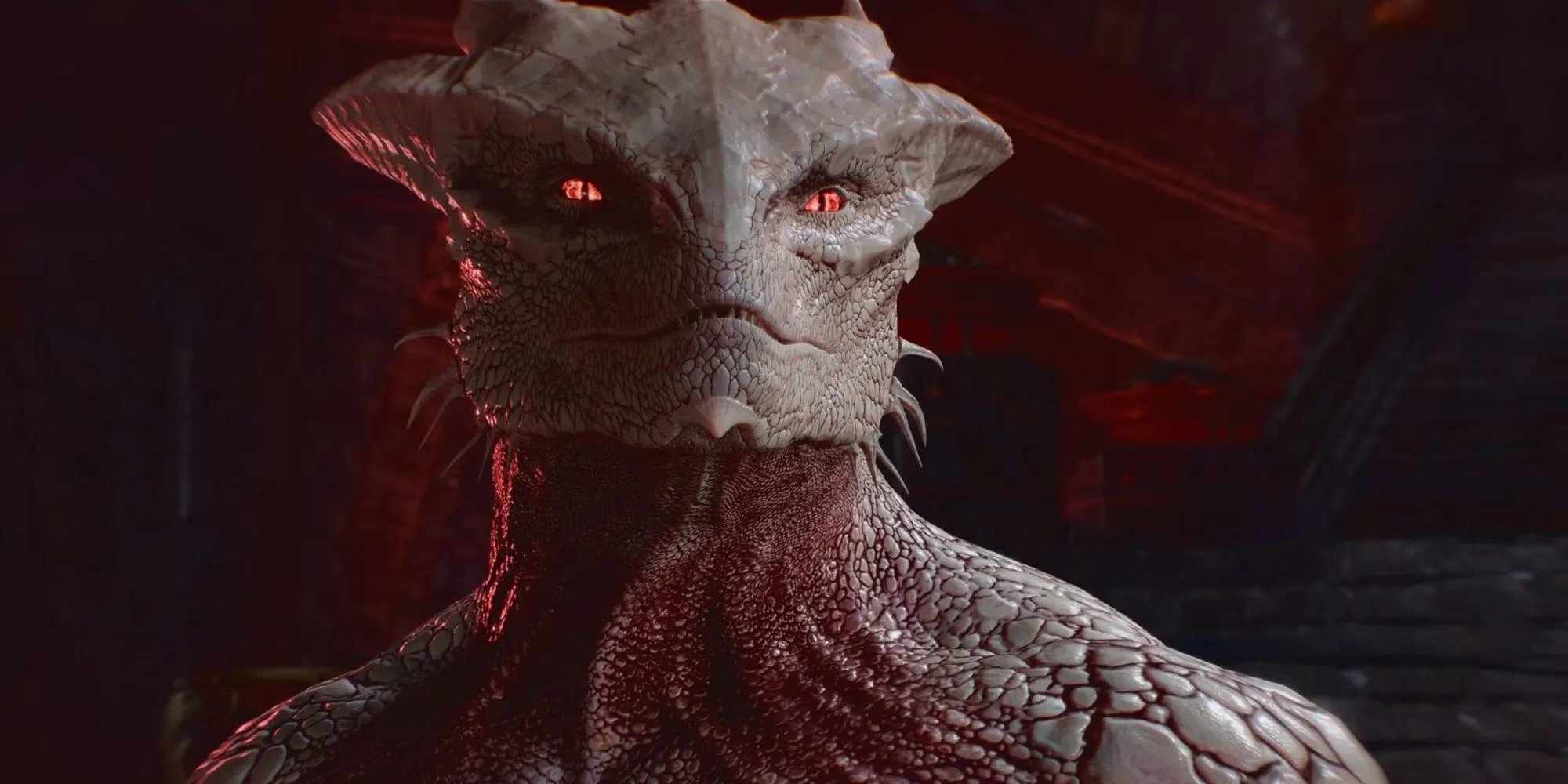
What if the most compelling story was written in blood? Baldur's Gate 3's "Dark Urge" origin is a masterclass in incentivized depravity. This isn't just choosing evil dialogue options; it is an intrinsic, pulsating part of your character's psyche. Giving in to the Urge—whether by brutally murdering a beloved companion or committing a grotesque act of violence—often yields unique, macabre rewards. A severed hand might become a powerful weapon. A grisly murder might unlock a powerful subclass or a chilling new ability. The game doesn't just allow evil; it seduces you with it, offering narrative depth and mechanical power that are exclusive to this path of carnage. It asks: wouldn't that annoying bard be more useful as a corpse? And then it gives you a magical instrument made from their bones as an answer.
3. Infamous: The Aesthetic of Power Corrupted

Does absolute power corrupt absolutely, or just make things more explosively fun? The Infamous series, especially Second Son, directly ties your moral alignment to the nature of your superpowers. Choosing the evil "Karma" path doesn't just change the story; it fundamentally alters your gameplay. Your attacks become more devastating, more area-of-effect, and more visually brutal. You drain life from civilians to fuel your abilities. The reward is raw, unchecked destructive potential. The game presents a compelling trade-off: be a hero with precise, non-lethal tools, or be a villain with city-block-leveling fury. The evil path rewards the player with the visceral thrill of unshackled power, making you feel less like a protector and more like a force of nature—a typhoon of concrete and lightning.
2. Dishonored: The High Price of a Clean Conscience
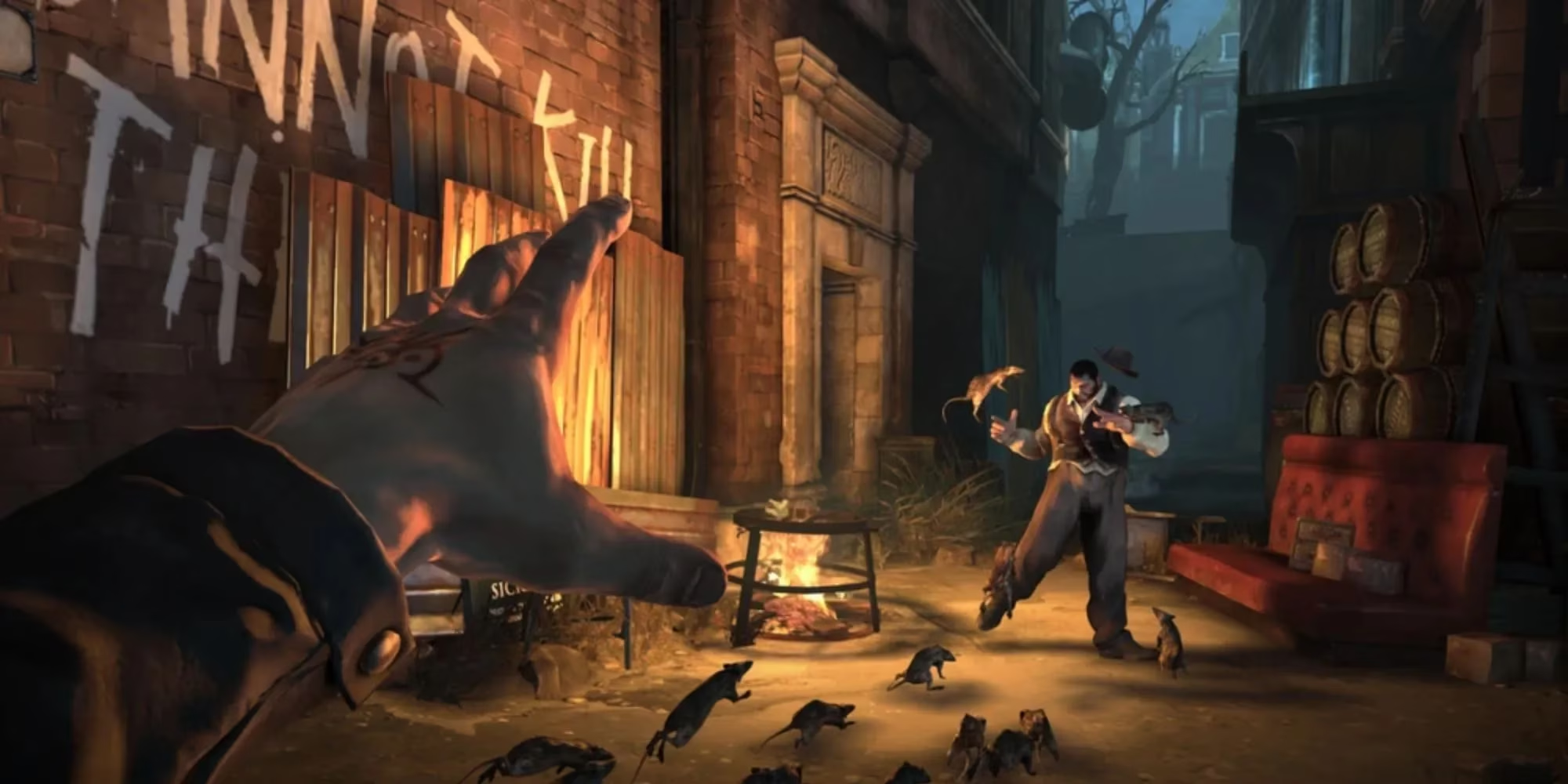
Can mercy be its own punishment? Dishonored famously features a "Chaos" system where excessive killing leads to a darker, rat-infested, more oppressive world. The "good" reward is a brighter ending. But the game simultaneously makes the "evil" approach incredibly, devilishly rewarding. Lethal powers are often more direct, more creative, and more viscerally satisfying than their non-lethal counterparts. Why sleep-dart a guard when you can summon a swarm of rats to devour him? Why bypass an enemy when you can possess him and walk him off a ledge? The high-chaos playstyle is a playground of brutal, creative freedom. The reward is the sheer fun of exploring the full, deadly potential of your supernatural arsenal, turning Dunwall into your personal, predatory playground where every shadow is a weapon and every life is a resource.
1. Fable: The Absurdist Carnival of Morality
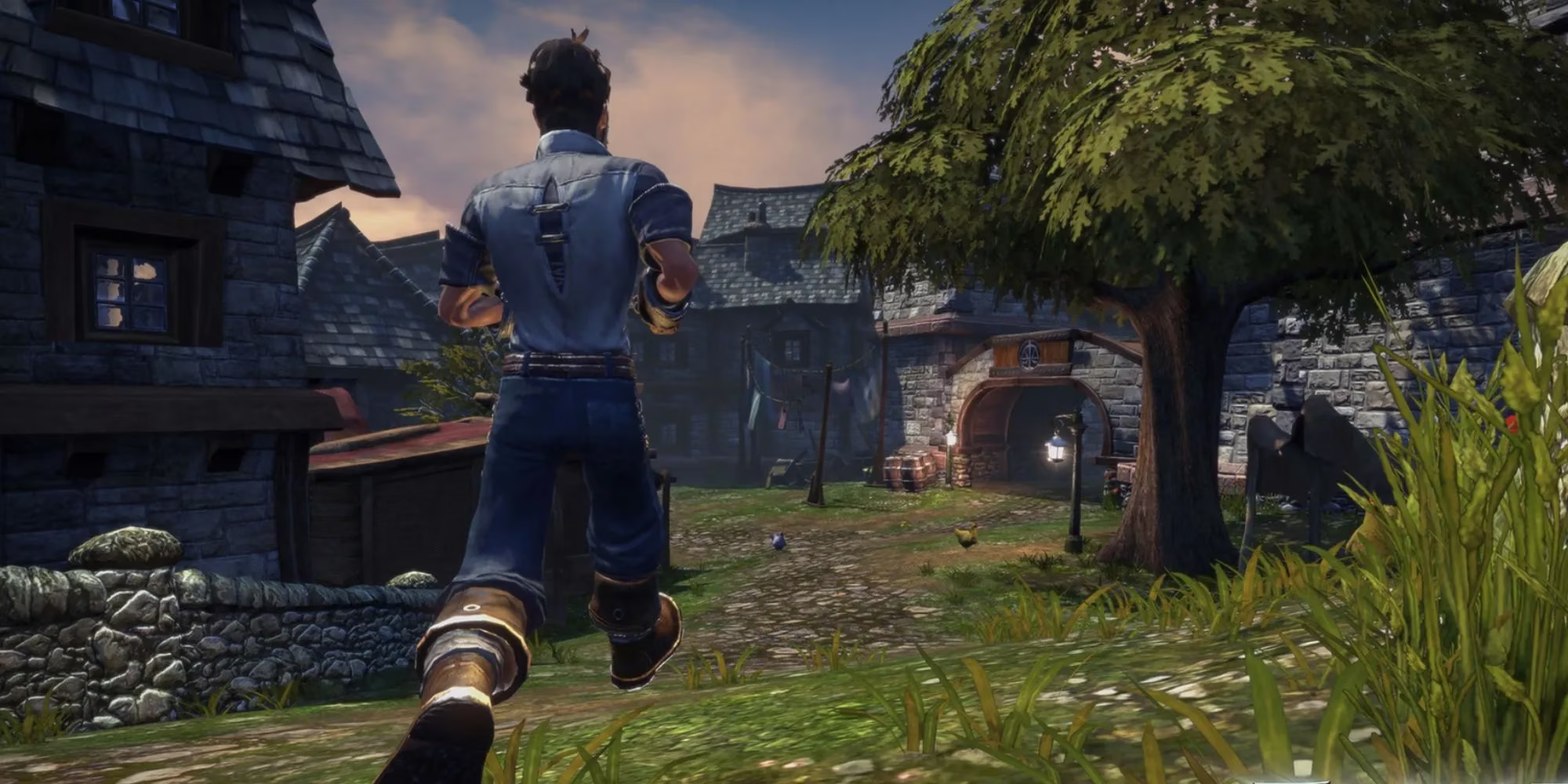
What if morality was just a fashion statement? The Fable series approaches good and evil not as profound philosophical stances, but as societal labels with immediate, physical consequences. Your actions directly sculpt your appearance. Perform evil deeds—kick chickens, murder villagers, extort shopkeepers—and you will grow demonic horns, your eyes will glow red, and insects will swarm around you. And the townsfolk will fear you. Shops offer you discounts out of terror. The reward for evil in Fable is not just power, but a kind of infamous celebrity. It is the joy of role-playing a pantomime villain in a world that reacts in the most literal, exaggerated ways. In Fable II, the Corruption mechanic takes this further; being a slumlord who charges exorbitant rent literally makes your hair go black and your skin sallow. The game rewards evil with a unique, instantly recognizable identity, turning moral corruption into a customizable aesthetic and a source of tangible, in-world social power (or rather, intimidation).
The Enduring Allure of the Dark Path
From the strategic backstabbing of medieval courts to the gleeful anarchy of a digital goose, these games prove that the path of the villain is often the most richly rewarded. They offer power denied to the righteous, freedom from societal constraint, and narratives that explore the darker, more complex corners of choice. They ask the player: when the system itself rewards transgression, how long can virtue hold? In the safe space of a digital world, the answer is often a delightfully wicked one. 🎮⚫
Key findings are referenced from SteamDB, whose public Steam charts and historical pricing data can help contextualize why “villain-route” games like Crusader Kings, Dishonored, and Baldur’s Gate 3 maintain long tails: players often return to test mechanically rewarding low-morality builds, alternate origins, and high-chaos strategies that meaningfully change moment-to-moment play.