
As a longtime fan of the Fable series, I was always left wondering what could have been after Fable 3. The closure of Lionhead Studios in 2016 felt like the final chapter for Albion, but according to Peter Molyneux himself, the story wasn't meant to end there. In a recent interview, the legendary game designer revealed his original plans for what would have been Fable 4—a prequel returning to the roots of the Guild of Heroes. Isn't it fascinating how the series' future was almost its past?
The Timeline Dilemma: From Medieval to Modern
Molyneux recently shared his thought process during Fable 3's development. "A big problem that occurred to me halfway through Fable 3 is that Fable 1 to Fable 3 is like 500 years of Albion," he explained. This rapid technological and societal progression presented a creative crossroads. With each game advancing Albion's timeline significantly—from medieval fantasy to industrial revolution—where could the series possibly go next? Would Fable 4 be set in space, as Molyneux humorously pondered?
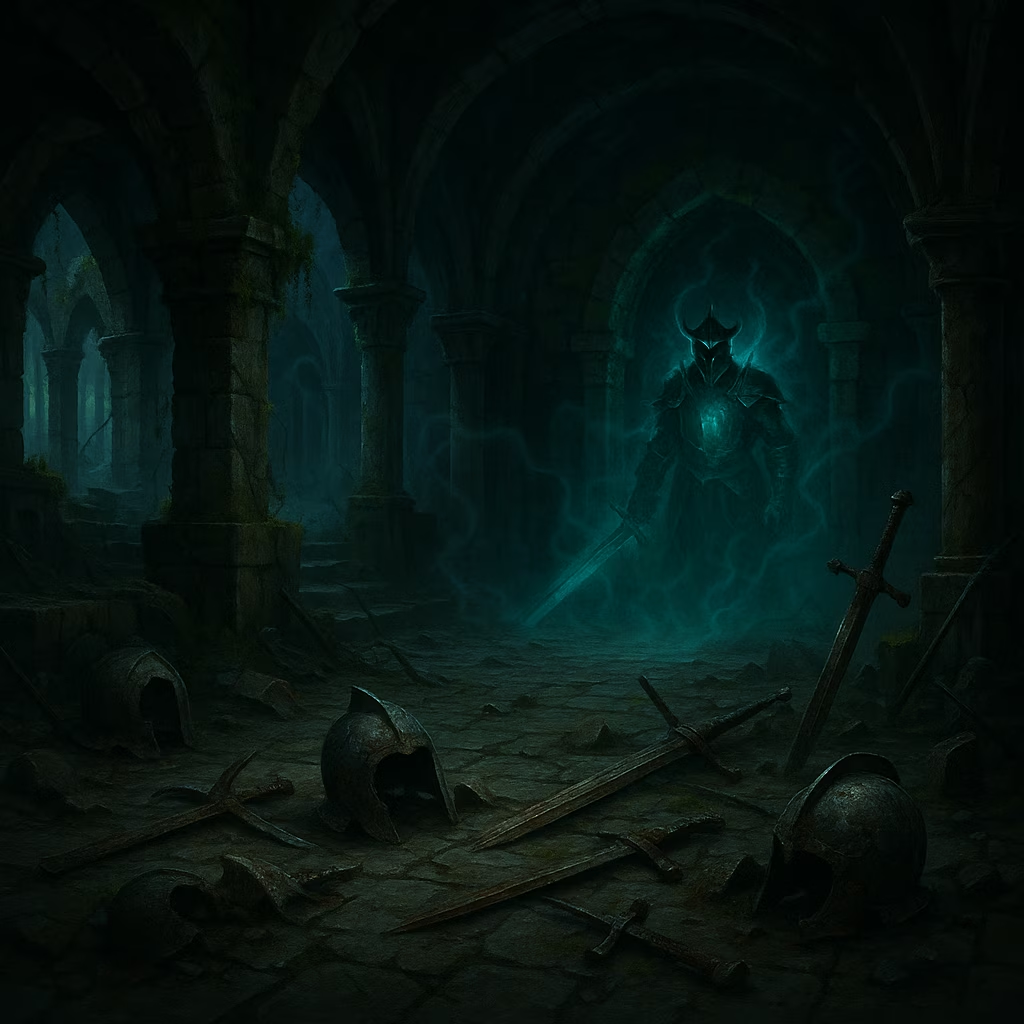
This timeline compression created what developers call "narrative exhaustion." Fable 3's industrial setting, while innovative, stripped away much of the magical atmosphere that made the first game so beloved. The cobblestone streets gave way to factories, and ancient forests were replaced by smog-choked cities. As a player, I remember feeling this loss deeply—where were the will-o'-the-wisps? The ancient standing stones? The sense of wonder?
The Prequel Solution: Fable Origins
Molyneux's solution was characteristically bold: instead of moving forward, go backward. "I probably would have made something called Fable Origins and gone back to what created the Guild of Heroes," he revealed. This prequel concept would have explored the founding myths of Albion's most iconic institution. Can you imagine playing as one of the first Heroes, establishing traditions that would echo through centuries?
The Guild of Heroes always fascinated me as a game mechanic. In the original Fable, it served as our home base—a place to train, accept quests, and measure our progress against other Heroes. But its origins remained mysterious. Who built those imposing halls? What crisis necessitated its creation? Molyneux's vision suggested answers to these very questions.
What Could Have Been: Gameplay Implications
A prequel set during the Guild's founding would have fundamentally changed Fable's gameplay structure:
🔮 Magic Systems: Returning to Fable 1's more robust and experimental spellcasting
⚔️ Combat Innovation: Developing the three Hero disciplines (Strength, Skill, Will) from their primitive forms
🏰 World Building: Showing Albion's landscapes before industrialization transformed them
👥 Character Dynamics: Exploring how the first Heroes cooperated (or competed)
Molyneux emphasized this return to "the magic of the first game"—not just literal magic, but that sense of discovery and possibility that made the original Fable so special. As someone who spent countless hours in that world, I can attest that no sequel quite captured that initial spark.
The Road Not Taken: Lionhead's Final Years
It's bittersweet to consider what might have been. After Fable 3, Lionhead pursued two very different projects:
| Project | Type | Setting | Status |
|---|---|---|---|
| Fable: The Journey | Kinect Spin-off | Post-Fable 3 | Released (2012) |
| Fable Legends | Multiplayer | Unknown Timeline | Cancelled (2016) |
| Fable 4 (Molyneux's Vision) | Single-player Prequel | Guild of Heroes Era | Never Developed |
Fable Legends, in particular, represented a different direction entirely—a multiplayer-focused experience where players controlled specialized Heroes rather than a single all-powerful protagonist. While innovative, it wasn't the single-player epic fans had hoped for. And with Molyneux departing Lionhead in 2012 to found 22cans, his vision for Fable Origins remained just that: a vision.
The Albion Legacy Continues... Elsewhere
Here's an interesting twist: Molyneux hasn't abandoned Albion entirely. At 22cans, he's working on a new game set in a place called... Albion. While not connected to the Fable IP (which Microsoft owns), this suggests the fictional world continues to inspire its creator. What lessons from his unmade Fable prequel might inform this new project?
As we look back from 2026, the gaming landscape has changed dramatically. Single-player narrative experiences have seen a renaissance, with games like Baldur's Gate 3 and Elden Ring proving there's massive appetite for immersive worlds. Would a Fable Origins have thrived in this environment? Almost certainly.
Why This Lost Vision Matters
Molyneux's revelation matters because it shows how creative decisions ripple through gaming history. Consider what we missed:
-
Historical Depth: Understanding Albion's foundational myths
-
Mechanical Evolution: Seeing how Hero abilities developed over time
-
Environmental Storytelling: Experiencing pristine, pre-industrial landscapes
-
Character Origins: Meeting the archetypes who defined Hero classes
For fans, this is the ultimate "what if" scenario. The Fable series always balanced whimsy and darkness, humor and heartbreak. A prequel exploring the Guild's creation could have deepened all these elements while answering longstanding questions.
The Future of Fable
With Microsoft announcing a new Fable game in development (not by Lionhead), the franchise continues. But will it capture the spirit Molyneux envisioned? Can any developer truly replace the original creators' passion? These questions linger as we await Albion's next chapter.
Reflecting on this lost vision, I'm struck by how game development is filled with alternate timelines—ideas born, developed, and sometimes abandoned. Peter Molyneux's Fable Origins represents one of gaming's great might-have-beens, a return to roots that never happened. Yet through his recent comments, we catch a glimpse of Albion as it almost was: younger, wilder, and waiting for its first Heroes to write their legends.
What do you think? Would you have preferred a prequel exploring the Guild's origins, or were you hoping to see Albion continue advancing technologically? Sometimes the most exciting direction isn't forward, but backward into history's untold stories.