
As I sit here in 2026, reflecting on the gaming landscape, my thoughts often drift to one of Microsoft's most enigmatic upcoming titles: the Fable reboot. It's a project shrouded in years of anticipation, whispers, and, frankly, a healthy dose of skepticism. For a long time, Microsoft's first-party lineup felt like it was missing a certain magical spark, and the absence of a proper Fable game was a gaping hole for fans of whimsical, choice-driven fantasy. The official announcement back in 2020 was a moment of pure joy, promising a brand-new beginning for the beloved, tongue-in-cheek franchise. But what truly fascinates me is not just the promise of Albion's return, but the studio tasked with its revival: Playground Games. This is a team famous for crafting the sun-drenched, liberating worlds of Forza Horizon, now attempting to build a sprawling fantasy RPG. It's a leap of faith so grand it captures the imagination, for better or worse.
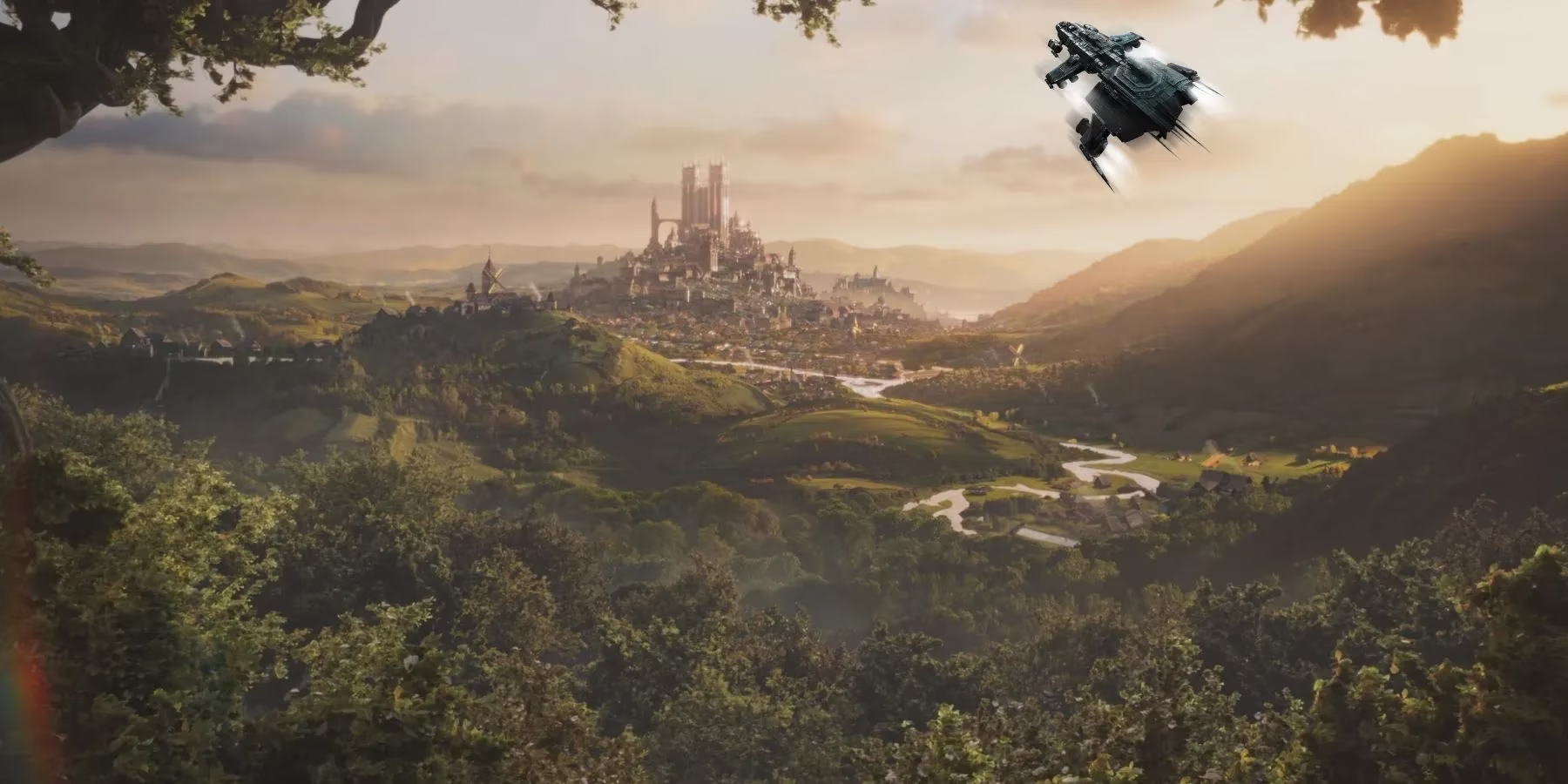
The story of Playground Games is, in itself, a testament to focused excellence. Founded in 2010 and quickly scooped up by Xbox, their entire legacy was built on the Forza Horizon series. From their very first game, they demonstrated an incredible knack for open-world design, technical prowess, and pure, unadulterated fun. I've spent countless hours racing across Mexico in Forza Horizon 5, and the sheer polish and scale of that world is a masterclass in its genre. For over a decade, this studio was synonymous with racing perfection, consistently delivering titles that not only met expectations but exceeded them, even filling the void during gaps in the mainline Forza series. Their resume is impeccable.
Yet, that very resume is what makes the Fable project so intriguing and daunting. Let's be honest: the chasm between a sandbox racing game and a narrative-driven fantasy RPG is monumental. 😅 We're talking about translating skills from mastering vehicle physics and open-road exploration to crafting third-person combat, branching storylines, player morality systems, and rich character interactions. The core competencies seem worlds apart. I can't help but worry if Playground is biting off more than it can chew. Developing in an entirely new genre is a pressure cooker of challenges, from narrative design to gameplay loops that are fundamentally alien to their past work.
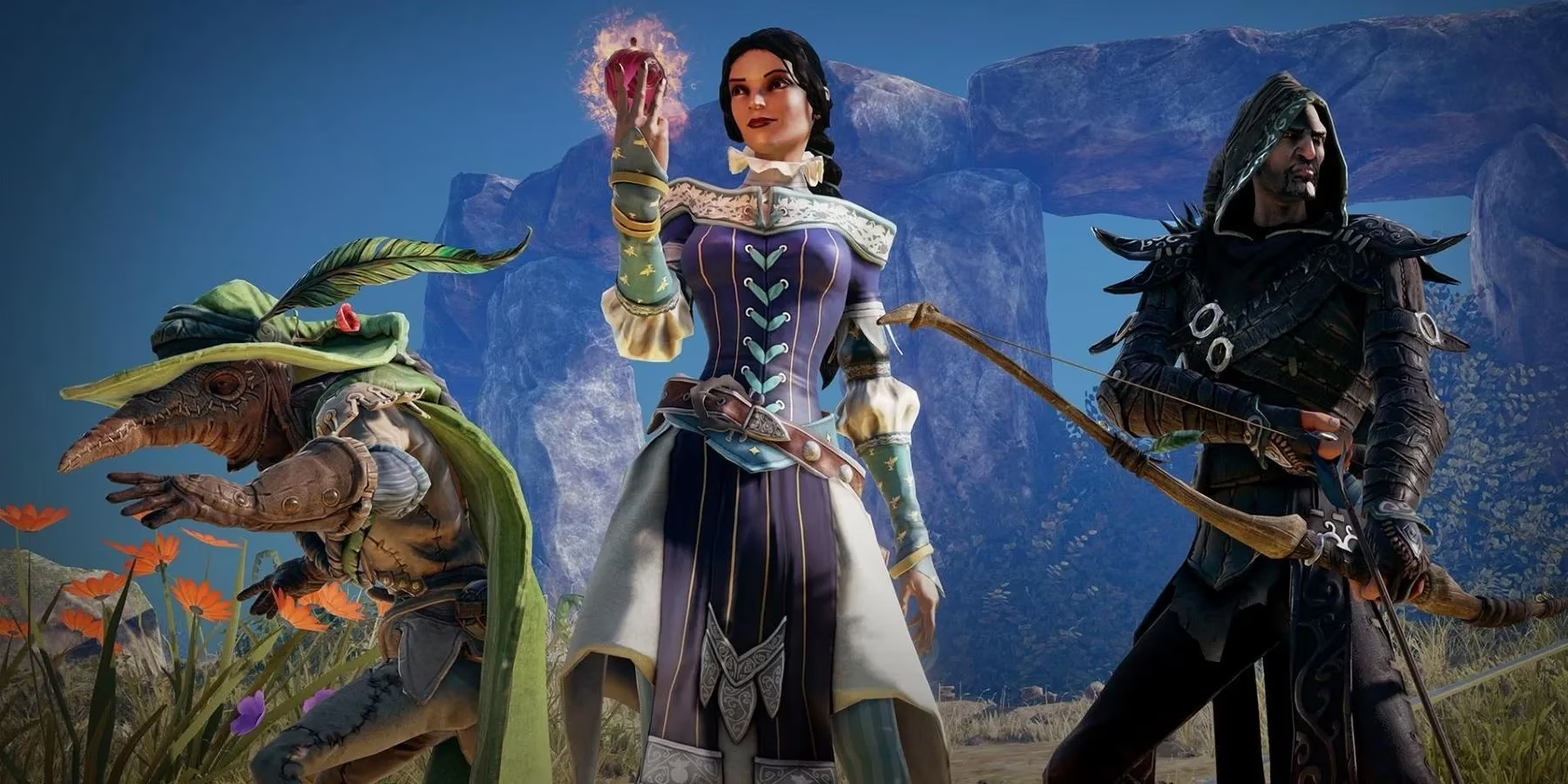
The weight of expectation resting on this reboot is immense. For many of us, the franchise peaked with Fable 2 back in 2008. That game was a masterpiece of its time, offering:
-
A truly impactful morality system that changed the world and your character's appearance.
-
A plethora of combat styles (melee, ranged, magic) that felt rewarding to master.
-
Hilarious, British humor that never took itself too seriously.
-
Tons of compelling side content and customization.
While Fable 3 was solid, it lacked some of that magical spark, and the mainline series has been dormant since 2010. The longing for a proper return is palpable. Microsoft isn't just hoping for a good game; they are relying on Fable to become a cornerstone of their first-party portfolio once again. That's a tremendous amount of pressure to place on a studio making its genre debut.
Interestingly, this situation reminds me of another studio's recent ambitious leap, though on a slightly different scale: Bethesda with Starfield. While Bethesda had a strong foundation in RPGs (Fallout, Elder Scrolls), Starfield required them to venture into entirely new mechanics, like spaceship piloting, customization, and interstellar exploration on a scale they'd never attempted before. Both projects represent studios stretching their creative muscles into unfamiliar territory, with the hopes of millions of fans riding on their success. The development parallels are fascinating.
So, where does that leave us, the players, in 2026? The silence around Fable has been lengthy, but that often precedes something great. My hope is that Playground Games has used this extended development time to learn, adapt, and inject their proven talent for creating vibrant, engaging open worlds into the heart of Albion. Their skill in environmental storytelling and crafting a world that feels alive and worth exploring could be their secret weapon. If they can marry that with compelling RPG mechanics and the series' signature charm, they might just pull off a miracle.
Ultimately, the journey of Fable's development is a compelling narrative in itself. It's a story about creative risk, studio evolution, and the heavy burden of legacy. As I await more news, I choose to be cautiously optimistic. The leap from Forza to Fable is vast, but the greatest achievements in this industry often come from those daring to make the jump. Playground Games has earned our attention; now, we wait to see if they can earn our belief.
| Aspect | Playground's Forza Horizon Legacy | The Challenge for Fable |
|---|---|---|
| Core Gameplay | Racing, vehicle handling, open-world exploration | Third-person combat, spellcasting, dialogue trees, quest design |
| World Design | Large, geographically diverse maps focused on traversal | Dense, interactive fantasy worlds with NPCs, towns, and dungeons |
| Player Progression | Unlocking cars, perks, and cosmetic items | Character stats, skill trees, moral alignment, and narrative consequences |
| Technical Focus | Vehicle physics, dynamic weather/ seasons, seamless multiplayer | AI behavior, animation for combat/interaction, RPG systems integration |
The table above really highlights the sheer scale of the transition. It's not just a new game; it's a new language of game development they've had to learn. Yet, if any studio has the dedication and technical excellence to attempt it, it might just be Playground. Here's to hoping that when Fable finally emerges, it brings with it the magic we remember and the innovation we crave. ✨