
In the quiet glow of my screen, I have learned that love is a pixelated, complex algorithm. It's a quest not just for a partner, but for understanding the fragile architecture of connection itself. Video games, those sprawling digital worlds, have become my most profound teachers in the matters of the heart. They allow me to build a life, to promise forever, and then, with a click or a neglected gift, to watch it all crumble. What is love without the possibility of its end? The games that dare to include divorce offer a startling, poignant truth: commitment is a choice, renewed daily, and its dissolution is a narrative all its own. These are the worlds where I have loved, lost, and learned.
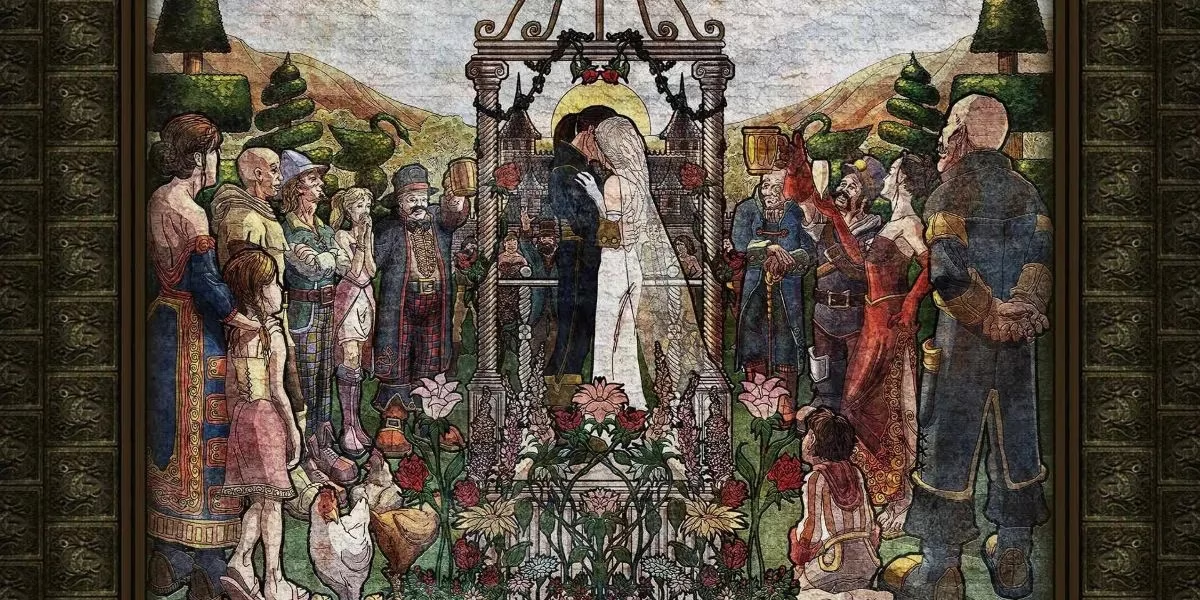
My first lesson in digital heartbreak came in the rolling hills of Albion. The Fable series, a masterpiece of its era, presented morality not as black and white, but as a spectrum I painted with my actions. I could be a revered hero or a feared villain, and my romantic life was no different. Wooing a villager was a simple matter of gifts and flirtatious expressions. The wedding was a joyous, public event. But marriage... marriage required upkeep. It demanded affection and gold, a constant tending to a digital flame. I learned the hard way that neglect is a slow poison. Returning to my homestead after a long adventure, I was met not with a warm embrace, but with a cold request for divorce. The game didn't judge me; it simply reflected the consequence of my choices. My spouse packed their pixelated bags and left, a quiet, profound end to a story I had authored through inattention.
The pastoral life called to me next, in Forget-Me-Not-Valley. Harvest Moon: A Wonderful Life was gentler, its rhythms tied to the sun and the soil. Here, love grew as slowly and deliberately as my crops. I courted one of the valley's bachelorettes, learning her favorite gifts, sharing conversations by the river. The proposal, symbolized by a sacred Blue Feather, felt like a true culmination. Yet, this game held the most severe warning. Divorce was not an option on a menu; it was a catastrophic failure. If I failed in my duties as a husband and father, my family would leave, and the game would end. Full stop. It taught me that some bonds, once broken, can shatter the entire world you've built. The promise of the upcoming remake, with its inclusivity for all genders and identities, makes me eager to return, to build a love that can withstand the digital seasons with more care than I showed before.
Then, I found myself in the post-apocalyptic warmth of Portia. My Time at Portia surprised me. Amidst rebuilding civilization from ancient ruins, the heart still yearned for connection. I could date anyone, a freedom that felt beautifully modern. Building a home upgrade was a prerequisite for proposal—a literal and metaphorical foundation. The wedding was automatic, a sudden, joyful leap. But the mechanism for divorce was uniquely poetic: a Broken Mirror. Gifting this shattered object to your spouse was a brutally clear metaphor, severing the bond and drastically reducing our relationship level. Yet, hope remained! Unlike the absolute end in Forget-Me-Not-Valley, Portia allowed for reconciliation. With hard work and repaired trust, the mirror could be made whole again. It was a lesson in second chances, a nod to the messy, non-linear path of human relationships.
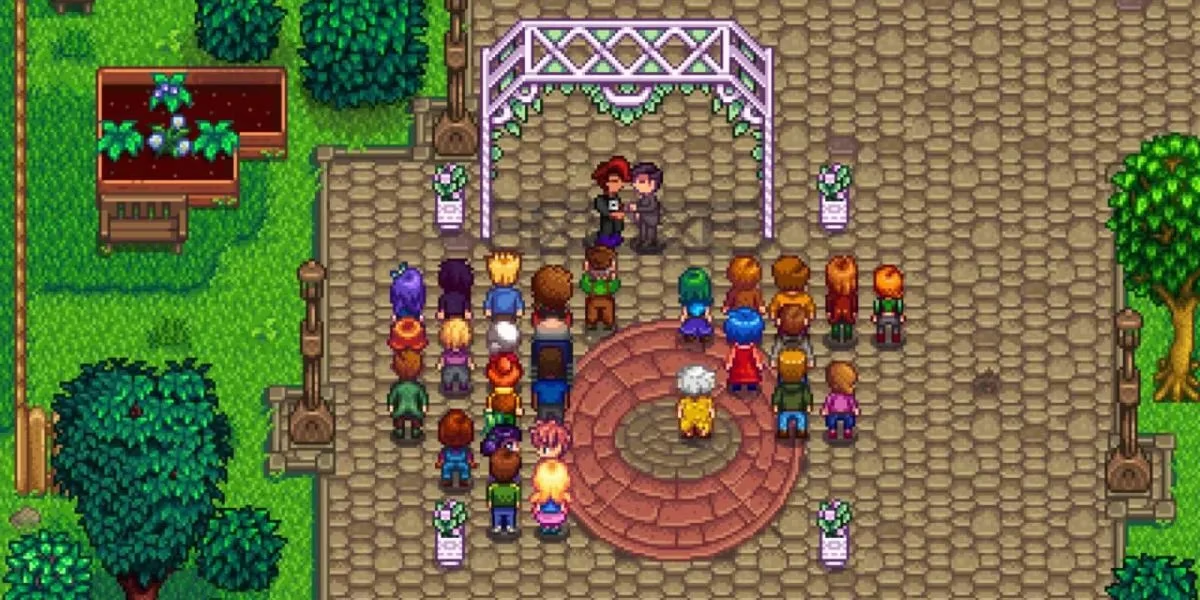
No journey through virtual love is complete without a stay in Pelican Town. Stardew Valley perfected the formula. Earning ten hearts with a neighbor felt like a genuine friendship blossoming into romance. Buying the Mermaid's Pendant from the mysterious Old Mariner was a rite of passage. The three-day wait for the wedding was filled with sweet anticipation. But the divorce process was chillingly bureaucratic. I had to go to the Mayor's Manor, open a small, ominous book, and pay a hefty sum of 50,000g. The next day, my spouse was gone—their room empty, their schedule erased. The friendship hearts plummeted to zero. The genius touch? The option to cancel the divorce until 10 PM. That window of regret, that digital cooling-off period, mirrored the tumultuous, uncertain feelings of real-world separation. It was a system with soul.
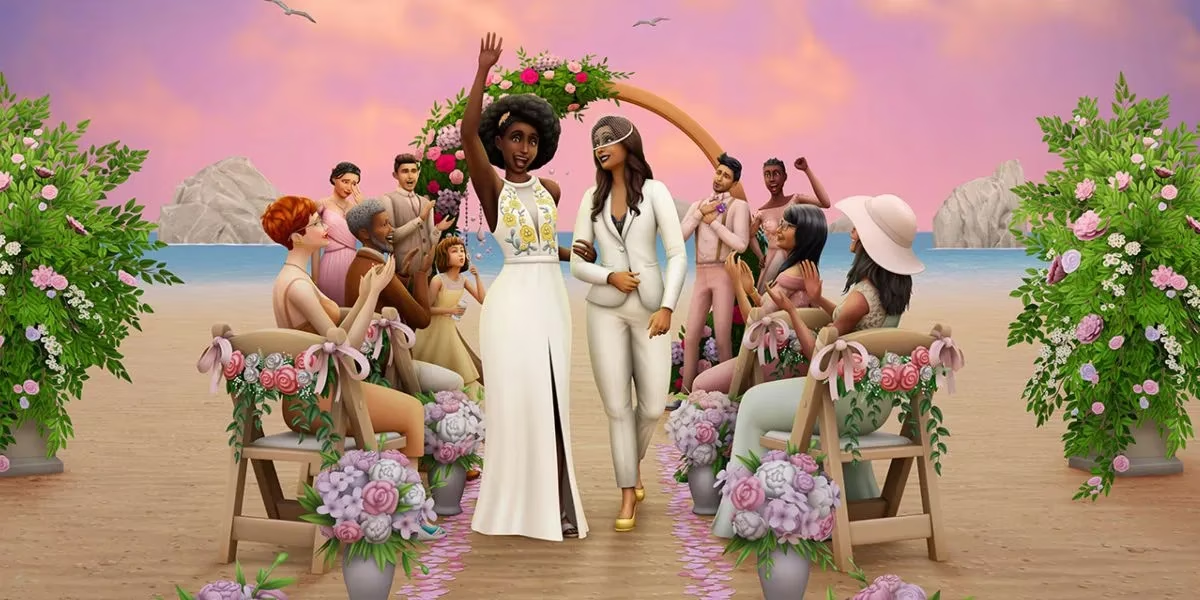
Finally, I entered the ultimate sandbox: The Sims 4. This is the laboratory of human interaction, where relationships are built through countless social interactions. The path to marriage is a deliberate climb through friendship and romance, culminating in a planned wedding or a spontaneous elopement. Divorce, however, is found under the "Mean" interactions. Clicking it is a visceral choice. The game doesn't let you off easy: children get a Sad Moodlet, the divorcing Sims get a Very Sad Moodlet. The emotional fallout is quantified, a reminder that these pixels represent lives with feelings. It underscores that even in a world of god-like control, breaking a heart has weight and consequence.
Through these experiences, I've realized these games are more than pastimes. They are intimate spaces to explore the full cycle of love.
| Game | Proposal Symbol | Divorce Mechanism | Core Lesson |
|---|---|---|---|
| Fable | Romantic Gestures | Neglect & Abandonment | Love requires active upkeep. |
| Harvest Moon | Blue Feather | Marital Failure (Game Over) | Some bonds are foundational to your whole world. |
| My Time at Portia | House Upgrade | Gift of a Broken Mirror | Relationships can break, but with work, they can also mend. |
| Stardew Valley | Mermaid's Pendant | Mayoral Book & 50,000g | Separation is a costly, formal act with a window for regret. |
| The Sims 4 | "Propose" Interaction | "Divorce" (Mean Interaction) | Emotional consequences affect the whole digital family. |
They allow me to safely navigate the joy of union and the profound sadness of its end. In 2026, as these worlds grow ever more complex and inclusive, I am grateful for the ability to not just play a hero or a farmer, but to play a human—flawed, loving, and sometimes, heartbroken. The option for divorce isn't about encouraging failure; it's about honoring the truth of the story, in all its beautiful, painful complexity. After all, what is a story without the risk of a bittersweet ending? 🎮❤️💔