
The Fable franchise has been gathering dust on the shelf for over a decade, but with Fable 4 finally revving up for its 2026 release, the pressure is on to prove that Albion still has magic left in the tank. As Playground Games puts its own stamp on the legendary RPG series, one thing is crystal clear: if they want to hit the ground running, they could do a lot worse than cracking open The Witcher 3: Wild Hunt's playbook. CD Projekt Red's magnum opus might traffic in gloom and grit while Fable leans toward cheeky humour and whimsy, but when it comes to building a living, breathing fantasy world, there’s no denying that the White Wolf packs some serious lessons.
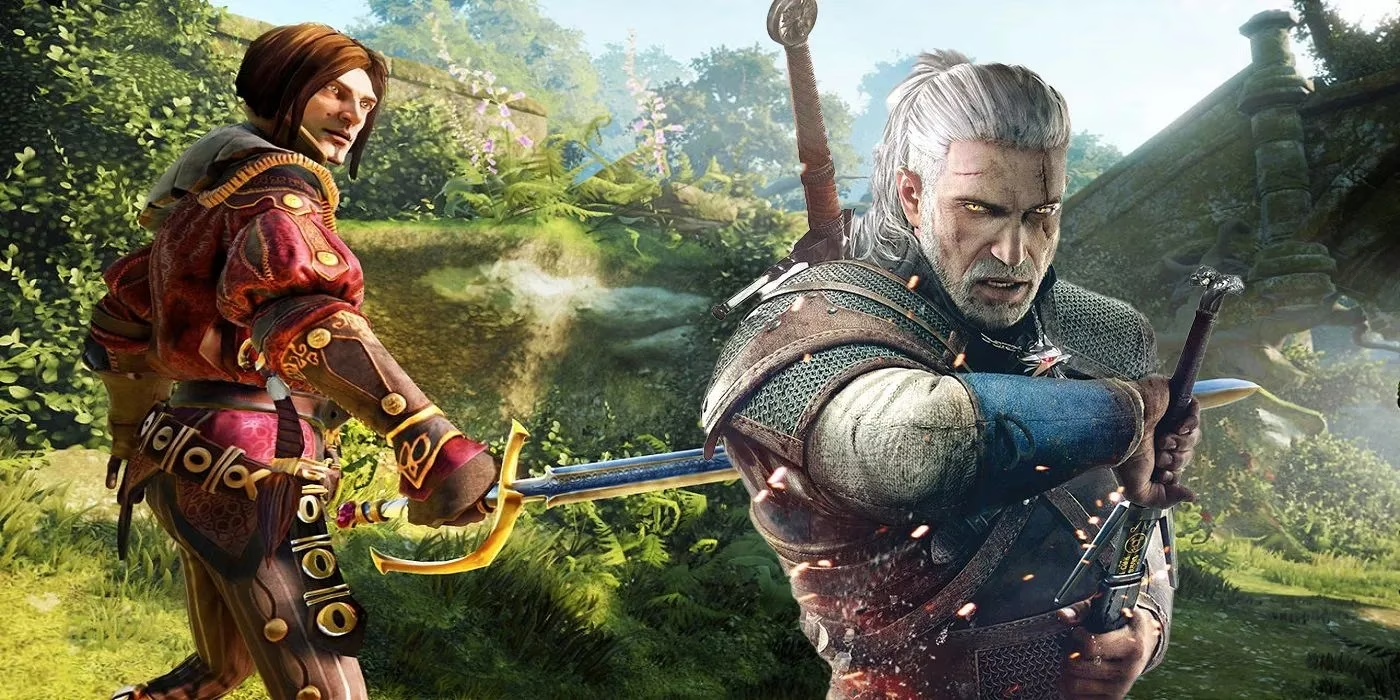
First up: side quests that feel like they matter. Let’s face it, the original Fable games often treated side activities as filler—fetch this, kill that, escort some helpless villager. In The Witcher 3, even the most off-the-beaten-path contract feels woven into the fabric of the world. Geralt doesn’t just hunt monsters for kicks; he’s doing it to pay for his next meal and keep Ciri’s trail warm without breaking character. The narrative stakes remain sky-high, yet slowing down to investigate a haunted well or solve a village’s grisly murder never feels like a betrayal of the main quest’s urgency. Fable 4 desperately needs that same rhythm—give players a reason to wander off the golden path that isn’t just “here be XP.” If our new hero has a mundane need like earning renown or coin to open the next gate, or if the story itself demands local intel that only side characters can provide, suddenly those optional jobs stop being a chore and start being a genuine part of the adventure. It’s the difference between “I have to grind side quests” and “I can’t wait to see what’s over that hill.”
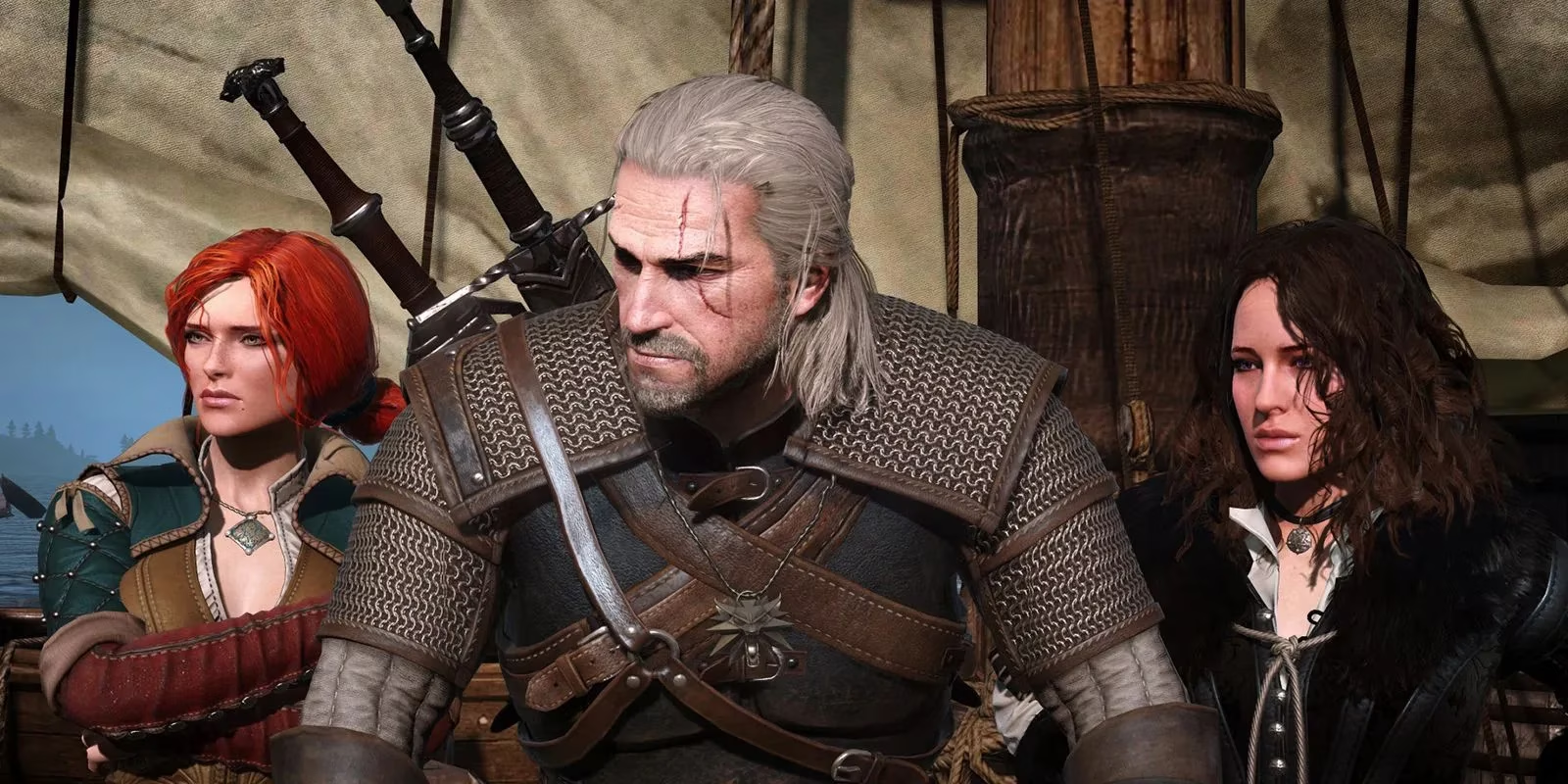
Speaking of stories worth chasing, The Witcher 3 also aces the art of romantic and platonic relationships that feel organic. Fable 3’s marriage system was about as deep as a puddle—woo someone with a gift, get married, have a kid, repeat. It was a checkbox simulator. In contrast, Geralt’s entanglements with Yennefer and Triss evolve naturally through the main storyline, their histories and tensions shaping entire acts. Even non-romantic bonds, like the bromance with Dandelion or the fatherly pull toward Ciri, drive the plot forward rather than exist in a vacuum. Fable 4 should take a leaf out of that book: weave its companion characters into the main narrative so that every relationship—whether platonic, romantic, or antagonistic—feels earned. Imagine a Fable where your alliances actually change how the world reacts to you, not just a slider on a stats screen.
Then there’s morality—the elephant in the room for any Fable revival. The classic good-vs-evil meter was iconic, sure, but it also boiled down to consuming tofu or slaughtering an entire town, with zero grey area. The Witcher 3, on the other hand, loves to drop you into a moral quagmire and watch you squirm. Do you free a cursed creature that might massacre innocents, or kill it and break a lover’s heart? There are no clean answers, and the consequences often blindside you hours later. Fable 4 could really knock it out of the park by dialling back the cartoonish extremes and embracing that ambiguity. Players should still have the option to become a cackling tyrant with horns sprouting from their skull, but the truly memorable choices are the ones where you pause, controller in hand, genuinely unsure of what the “right” call is. That’s the kind of moment that gets talked about years later on Reddit.
Of course, all this advice might be moot if Playground Games decides to throw the playbook out the window entirely. Since the game’s announcement back in 2020, the studio has kept its cards close to its chest, with only a cinematic teaser to go on. Rumours have swirled about a completely revamped combat system or a timeline that leaps far beyond the events of Fable 3. But no matter how radical the reinvention, the core truth remains: a fantasy RPG lives or dies by how deeply its world and characters sink their hooks into you. The Witcher 3 set a platinum standard, and while Fable’s tone will always be its own brand of sly, British-infused comedy, there’s no shame in borrowing a few pages from the best in the business.
As we inch closer to the 2026 release window, fingers are crossed that the new Fable delivers on its promise to be more than just a nostalgia trip. By learning how to balance an open world with meaningful side content, treating relationships as pillars of the story rather than afterthoughts, and injecting moral complexity that respects the player’s intelligence, Playground Games could craft an Albion that feels both fresh and timeless. The Witcher 3 may have deprecatingly called itself a “third-person fantasy RPG where you kill monsters and save the world,” but under that humble guise it rewrote the rulebook. If Fable 4 wants to claim its own crown, it’d be wise to take a long, hard look at the White Wolf’s legacy.