
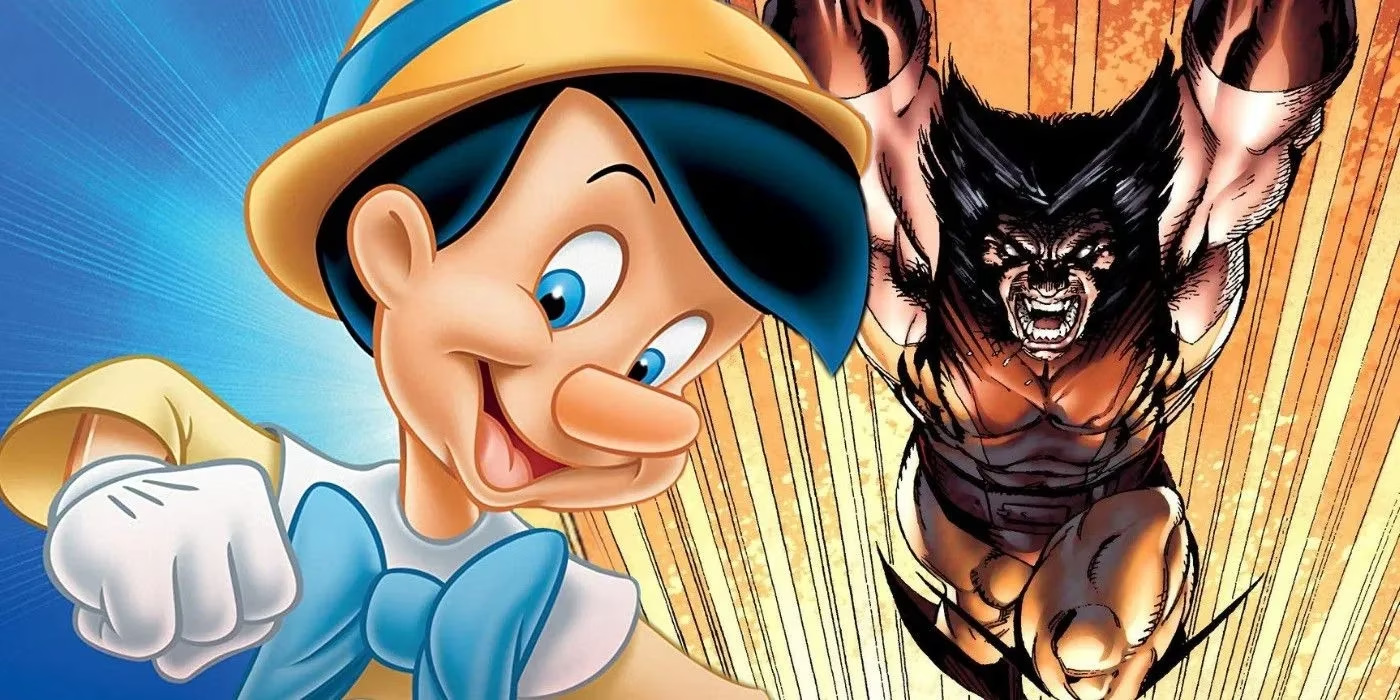
On the living island of Krakoa, Marvel’s mutants built a nation where resurrection was routine and old enemies shared the same council table. The idea felt almost utopian, but it rested on a quietly radical decision: everyone, including genocidal villains, received a fresh start. That decision did not come from nowhere. It echoed the Fabletown Compact, a piece of legal ingenuity from Bill Willingham’s Fables, the Vertigo series that ran from 2002 to 2015. In both stories, survival meant finding a way to turn monstrous pasts into workable political futures.
The Quiet Council’s Unlikely Peace
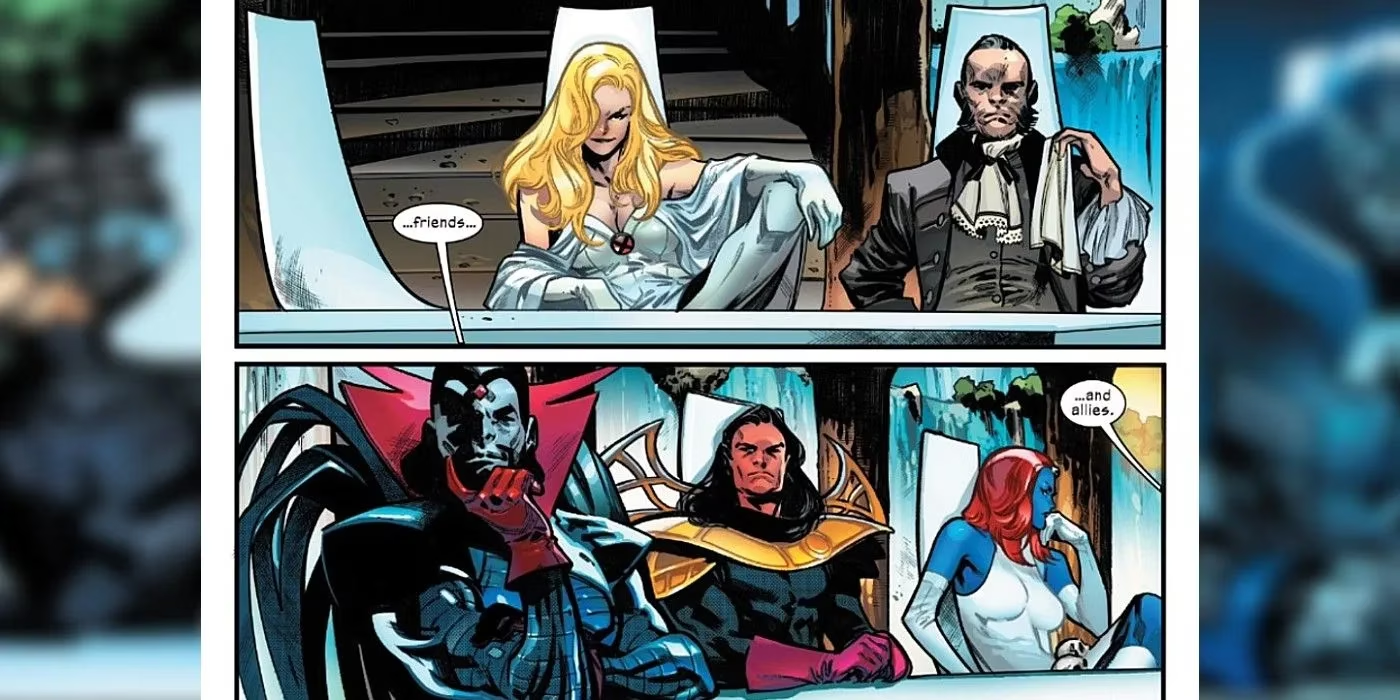
Krakoa’s Quiet Council was carefully assembled to give villains a voice rather than lock them out. Apocalypse, Mister Sinister, Sebastian Shaw, and Magneto sat alongside heroes who had spent decades trying to stop them. The island itself seemed to breathe with a strange confidence, as if forgetting the past were simply a matter of good architecture and better resurrection protocols. In practice, though, the amnesty was official but not personal. Sabretooth was imprisoned for killing humans against orders, proving that Krakoa’s law still had teeth, even if old grudges were no longer supposed to drive policy.
This arrangement asked a great deal of mutants who had suffered at the hands of those very neighbors. Apocalypse had scoured souls and shattered teams. Asking his victims to accept him as a governing partner was not exactly an easy pill to swallow. But the alternative, endless civil war on an island that was supposed to be a refuge, was worse. So the Quiet Council became a political experiment as much as a judicial body, blending forgiveness with ruthless pragmatism.
Fabletown’s Binding Solution
Fables told a similar story with fairy-tale characters forced out of their homelands by a mysterious Adversary. Fabletown, a magical enclave on Earth, had to house heroes and monsters under one roof. Bigby Wolf, the former Big Bad Wolf, lived near Bluebeard and Frau Totenkinder, figures whose crimes were not abstract. For that community to survive, the residents needed to bury the hatchet, but no one could pretend the hatchet had never been swung.
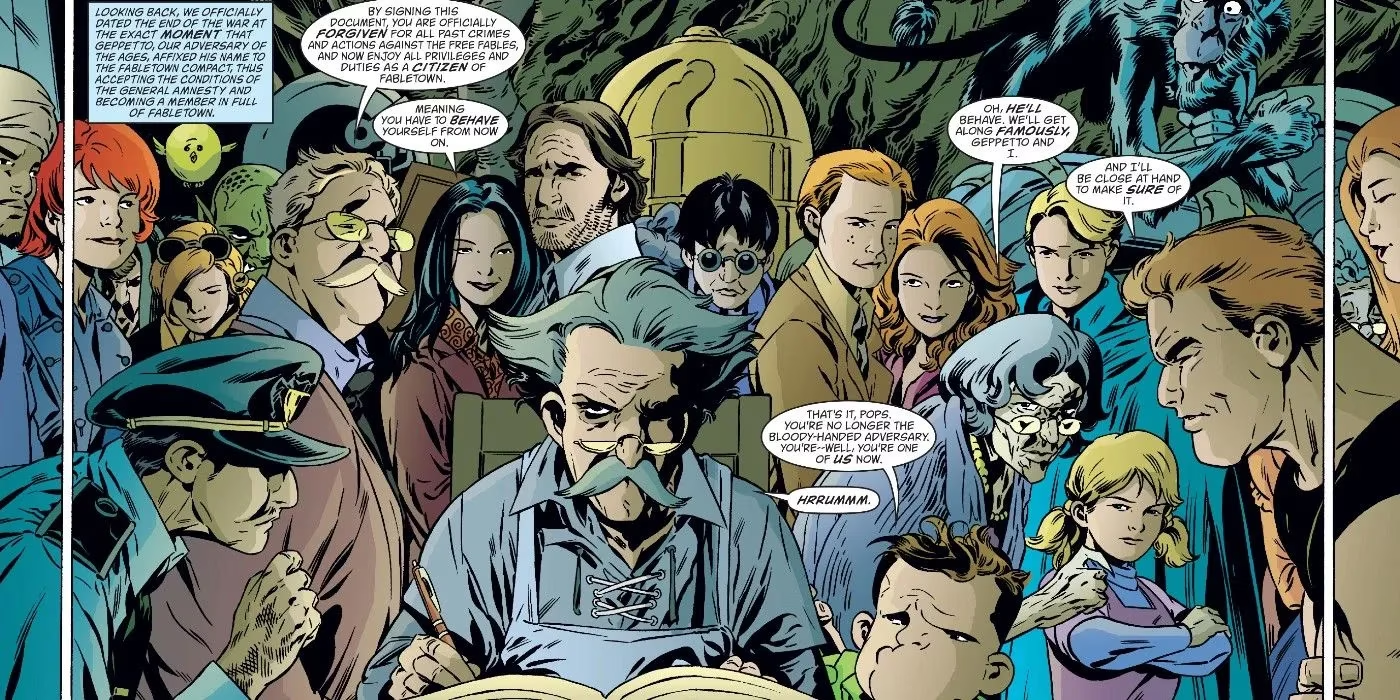
The answer was the Fabletown Compact. This binding document forgave every signatory for all crimes committed before arriving on Earth, known and unknown, while imposing new laws that could carry the death penalty. It drew a clear line between the old world and the new one. Even the worst villains received a fresh start, at least on paper. Some truly changed; others simply learned to operate within the system. By the time the main Fables story began, many former antagonists had become essential members of the community.
Two Nations, One Dangerous Idea
The parallels between Krakoa and Fabletown run deeper than a general mood of forgiveness. Both communities faced the same practical problem: how do you build a nation when half your population once tried to kill the other half? The Fabletown Compact solved it with legal finality. Krakoa solved it with resurrection, shared institutions, and a sweeping cultural assertion that mutant crimes against other mutants were part of the old world. In both cases, the message was clear: let bygones be bygones, or the whole project collapses.
A comparison table helps clarify the shared blueprint:
| Element | Fabletown Compact | Krakoa Amnesty |
|---|---|---|
| Who participates | Every Fable arriving on Earth | Mutants living on Krakoa, including villains |
| Crimes addressed | All pre-arrival crimes, known or unknown | Old grudges officially forgiven, not personally erased |
| New rules | Binding laws, some punishable by death | Krakoa’s laws, enforced by the Quiet Council |
| Core risk | Villains could manipulate the system | Former enemies could sabotage the nation from within |
| Story example | Geppetto, the Adversary, signs after Pinocchio urges him | Apocalypse and Sinister join the Quiet Council |
⚖️ The Cost of Forgiving the Devil You Know
In Fables, the reveal that Geppetto was the Adversary added a bitter twist. The lonely woodcarver who created Pinocchio had caused immense suffering. When Pinocchio persuaded him to sign the Fabletown Compact, the document forced his victims to formally forgive him. It was legal theater with enormous emotional weight, and it worked because everyone had already agreed that the alternative was worse. The X-Men’s Krakoa era faced a comparable dilemma during events like X of Swords, when brute strength alone could not solve every problem. Political savvy and creative compromise became just as important as claws and optic blasts.
Looking back from 2026, the Krakoa era did not remain a golden tomorrow forever. The island’s later collapse and the scattering of mutantkind revealed how fragile that initial forgiveness really was. But the foundation Jonathan Hickman laid remains one of the boldest experiments in superhero comics. It borrowed an idea from a story about Pinocchio and reshaped it into a mutant nation. The devil you know, it turned out, could be invited to the table, given a voice, and maybe even transformed by the rules of the house. Whether that was wisdom or hubris depended on which side of the table one happened to be sitting.