
Whisper it gently, but Albion is stirring once again — and this time, it’s flexing some seriously custom muscles. Back in the day, the Fable series was the quirky kid on the RPG block, wooing players with fart jokes, moral choices that actually stuck, and a world that aged along with its hero. Fast forward to 2026, and the franchise has undergone a metamorphosis that makes the Hero of Oakvale’s journey look like a lazy Sunday stroll. The masterminds at Playground Games — yes, the same wizards who turned Forza Horizon into a petrolhead paradise — decided that if they were going to resurrect this beloved beast, they’d do it without borrowing anyone else’s toys. No off-the-shelf engines. No third-party shortcuts. Just a home-brewed, handcrafted, pixel-pushing powerhouse born from scratch.

The plot thickened when a juicy job listing surfaced on Playground’s website. They weren’t just looking for any code jockey — they wanted an engineer fluent in C++, deeply comfortable with math, and battle-hardened in video game development. In other words, someone capable of breathing life into a living, breathing Albion without leaning on Unity or Unreal. That’s like deciding to bake a wedding cake without a recipe, and then casually mentioning you’ll be milling your own flour. The ambition is staggering, but so is the pedigree.
Let’s rewind the clock for a moment. The original Fable, released way back in 2004 under the visionary chaos of Lionhead Studios, charmed the world with its ambition, even if Peter Molyneux’s promises sometimes outran reality. It was a game where you could kick chickens, grow horns, and accidentally marry the town mayor’s daughter. Fable II refined the formula, adding a dog that loved you unconditionally and a Crucible that turned combat into a roaring spectacle. Fable III threw in a throne and kingdom management, and then… things got wobbly. Fable: The Journey strapped on the Kinect and, to put it kindly, stumbled harder than a drunk hobbe. A snazzy remake of the first game, Fable Anniversary, landed on Steam to remind everyone why they fell in love in the first place, but it wasn’t enough to keep Lionhead’s lights on. The studio faded, and Albion’s future looked murkier than a Bowerstone puddle.
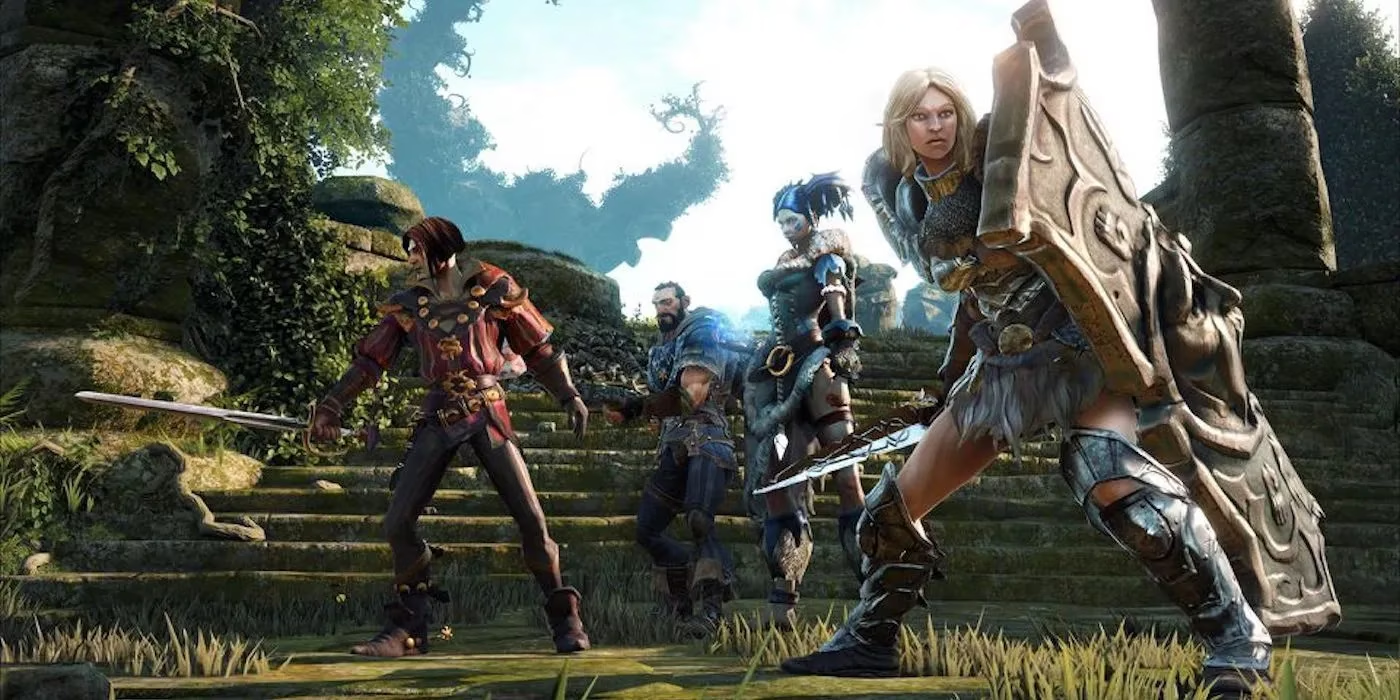
Enter Playground Games, stage left, clutching a shiny new engine and a vision. They first teased the reboot during an Xbox Games Presentation a few years back, and ever since, fans have been chewing their fists in anticipation. The decision to build a proprietary engine isn’t just technical bravado — it’s a statement. It says, “We’re not just making another Fable. We’re sculpting a new heart for Albion.” Custom engines let developers fine-tune every strand of foliage, every shimmer of magic, every cheeky chicken strut, instead of wrestling with a one-size-fits-all toolset. For a series built on detail, charm, and emergent mischief, that’s the difference between a cosy fantasy postcard and a world you can almost smell.
Since the reboot officially burst onto the scene in late 2025, players have been wandering through forests that feel alive, brawling with balverines that move with unsettling fluidity, and, yes, punting poultry like it’s an Olympic sport. The custom engine — now affectionately nicknamed “The Forge” by the community — handles dynamic weather that genuinely reshapes the landscape, NPC schedules so organic you’d swear they have tiny little lives, and moral transformation effects that ripple across your hero’s face with unsettling grace. It’s as if the game world finally has the hardware to match Lionhead’s wildest dreams.
And can we talk about the loading screens? There are none, honey. Zip. Zilch. Nada. The engine streams Albion in real time, meaning you can sprint from the sun-dappled hills of Oakvale to the foggy streets of Bowerstone without a single spinning wheel. It’s the kind of magic that makes you double-check your console isn’t actually possessed by a trickster spirit.
Here’s the kicker — and you might want to sit down for this — the team behind this fantasy masterpiece is the same crew who made virtual cars feel like they had souls. If they can make a Pagani’s exhaust note sing, why wouldn’t they pour that same obsessive passion into the creak of a guild seal door? It’s a bit like finding out your favourite baker also happens to be a neurosurgeon, but hey, talent is talent.
The journey hasn’t been all rainbows and hobbe caves, of course. Going custom means the development cycle was long, with years of silence that had fans convinced the project was vapourware. Playground teased, hinted, and then vanished into a cave of their own, emerging only when they felt the engine was truly ready. The result, however, speaks for itself.
So where does that leave us? In 2026, the Fable reboot has not only revived a long-dormant franchise — it has set a new benchmark for what a homegrown engine can achieve on modern hardware. Xbox Series X|S owners are feasting, and even cloud streamers are reporting buttery performance. The game is already being hailed as a new high-water mark for action RPGs, and whispers of a Crucible-style DLC are already doing the rounds.
If there’s one thing this whole saga teaches us, it’s that sometimes, the best way to honour a legacy isn’t to just polish the old — it’s to rip out the foundations and build something entirely new. Albion is back, it’s gorgeous, and it runs on code that never existed before. Let’s be real: that’s the most Fable thing to ever happen to Fable.