
As Playground Games prepares to unveil its highly anticipated reboot of the Fable franchise in 2027, discussions among the gaming community have reignited regarding one of the original game's most distinctive yet abandoned mechanics: the Armor Rating system. The Fable series, throughout its storied history, has been a chameleon in the RPG landscape, constantly shedding its skin with each new installment. While this reflected developer Lionhead Studios' penchant for innovation under Peter Molyneux's visionary, if sometimes chaotic, leadership, it also led to the discarding of features that many fans found endearing. The original 2004 title's straightforward armor progression, a system as foundational and clear-cut as a medieval knight's code of honor, was one such casualty, absent from both Fable II and Fable III. Now, with a new developer at the helm and a fresh start on the horizon, the time may be ripe for this classic element to don its plate mail once more.
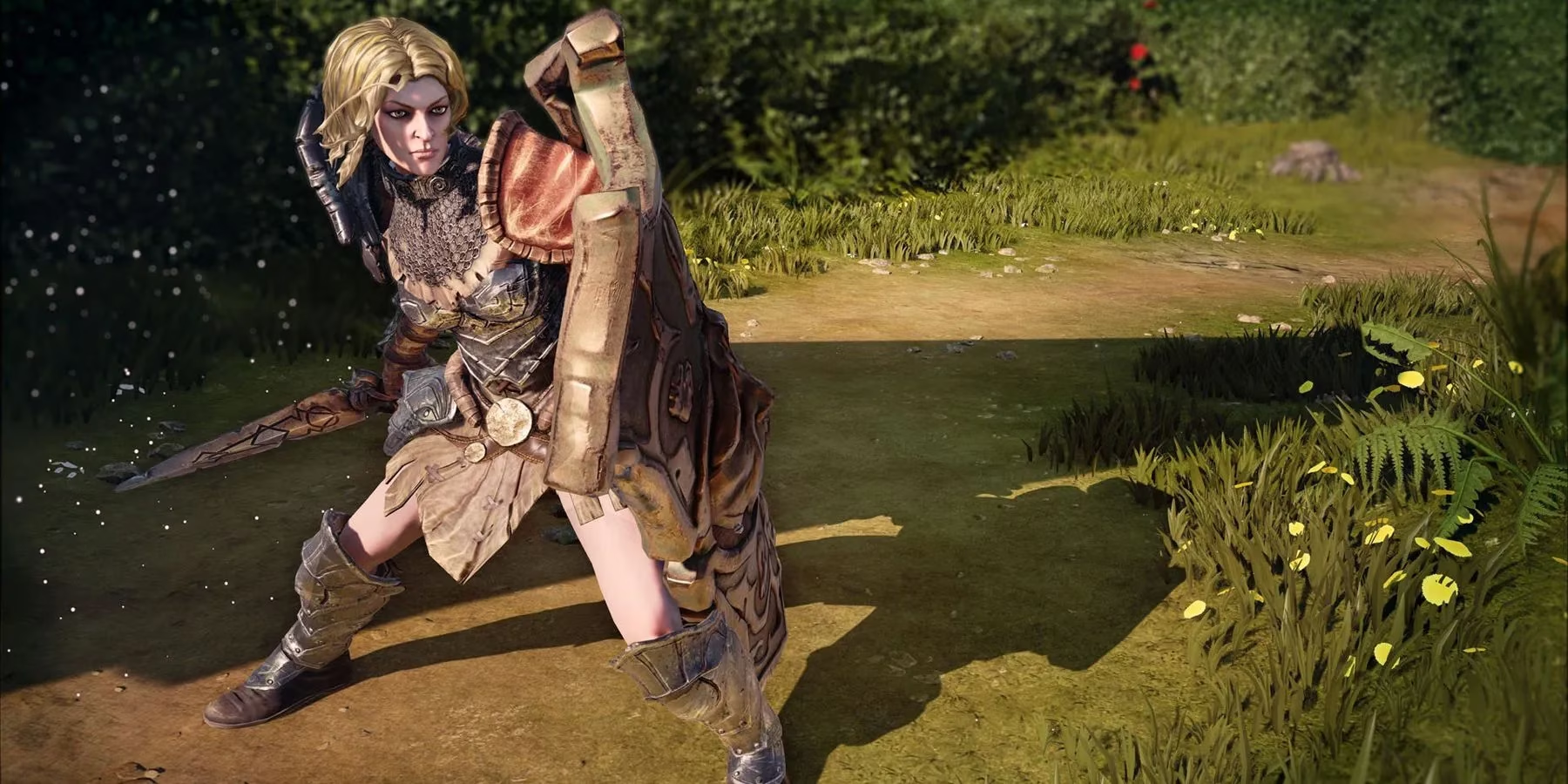
The armor system in the inaugural Fable was, by modern RPG standards, elegantly simple—some might say simplistic. It followed a linear hierarchy: Plate > Chainmail > Leather > Regular Clothing. This structure, while lacking the complex stat-puzzling of contemporaries, served as a silent narrator for the player's journey. Your avatar's silhouette evolved from a humble villager's tunic to the imposing, gleaming fortress of a full plate suit, visually charting your rise from obscurity to legend. This progression was as intuitive as watching a sapling grow into an oak; it provided immediate, tangible feedback on advancement. Certain outfits possessed minor quirks, like metal armors having a slight vulnerability to lightning damage, and a few offered niche bonuses for stealth or magic. However, for the vast majority of playthroughs, heavier armor was unequivocally better, with no encumbrance penalties or attribute requirements to justify choosing lighter gear in the late game.
This design philosophy was a double-edged sword. On one hand, it eliminated the frustration of finding high-tier equipment that was unusable due to stat blocks—a common RPG pain point. It created a clean, three-act structure for the player's power fantasy:
-
Act I (Leather): The formative years, focused on survival and basic quests.
-
Act II (Chainmail): The hero emerges, tackling greater threats and gaining renown.
-
Act III (Plate): The legend is forged, confronting the world's ultimate evils.
On the other hand, this system severely limited role-playing customization. The much-touted "Light and Dark" variants of outfits were essentially cosmetic palette swaps with minor reputation modifiers, while the situational bonuses of Assassin or Will User robes were no match for the raw damage reduction of metal. The armor system became less a suite of meaningful choices and more a uniform to be upgraded on a predetermined schedule.
🔄 A New Blueprint for Albion's Wardrobe
Playground Games' reboot presents a golden opportunity not to merely resurrect the old system, but to reforge it into something greater. The core trilogy's consistent division of abilities into Strength, Skill, and Will provides a perfect framework for a revitalized armor philosophy. Imagine a system where armor isn't just about defense, but actively complements your chosen playstyle, transforming your gear from passive protection into an extension of your hero's identity.
| Armor Archetype | Primary Stat Focus | Potential Playstyle Bonuses | Visual Theme |
|---|---|---|---|
| Juggernaut | Strength | Increased Melee Damage, Stagger Resistance, Health Regeneration | Heavy Plate, Spiked Pauldrons, Imposing Silhouette |
| Phantom | Skill | Critical Hit Chance, Attack Speed, Dodge Effectiveness | Reinforced Leather, Agile Design, Cloaks & Hoods |
| Arcanist | Will | Spell Potency, Mana Regeneration, Aura Effects | Ethereal Robes, Glowing Runes, Floating Accents |
| Hybrid Sets | Mixed (e.g., Str/Will) | Balanced Bonuses (e.g., Spellblade enhancements) | Thematically Blended Designs |
This approach would create parallel progression paths, each as valid and rewarding as the other. A Strength-focused brute in Juggernaut plate wouldn't just be tougher; they might gain the ability to shoulder-charge through enemy lines, their armor acting like a battering ram. A Skill-based rogue in Phantom gear could become a blur of motion, their attacks flowing together like a river over smooth stones. A Will user in Arcanist robes might see their spells warp the environment around them, their armor humming with contained power like a dormant volcano.
✨ The Holy Grail: Progression Meets Expression
Perhaps the most elegant solution lies in decoupling statistical power from pure aesthetics. Modern gaming has perfected the "transmog" or wardrobe system, as seen in titles like Diablo 4 and Cyberpunk 2077. Playground Games could implement this seamlessly:
-
Acquire Armor for Stats: Find or craft a powerful "Juggernaut Cuirass" with excellent defensive properties.
-
Acquire Outfits for Style: Discover a charming, if stat-weak, "Wanderer's Tunic" from a side quest.
-
Transmog: Apply the appearance of the Wanderer's Tunic to the Juggernaut Cuirass.
The result? Your hero looks exactly how you envision them—a humble traveler, a flamboyant noble, a sinister cultist—while still benefiting from end-game statistical progression. This system would be the alchemical fusion the series has always sought, marrying the clear, satisfying power climb of the original Fable with the boundless expressive freedom its successors championed. It would allow players to craft a hero whose external narrative, told through their chosen visage, could perfectly contrast or complement their internal statistical build.
As 2027 approaches, the community's hope is that Playground Games recognizes that sometimes, innovation isn't about inventing something entirely new, but about wisely reclaiming and refining what was lost. The return of a meaningful, choice-driven armor system could be the cornerstone upon which the new Fable rebuilds its identity—an identity that honors its legendary past while boldly striding into Albion's future. The hero's journey is defined not just by the enemies they defeat, but by the scars their armor bears and the stories their attire tells. It's time for players to once again care about what their Hero wears, not just for the numbers, but for the legend it helps them become.