
As the highly anticipated reboot of the beloved Fable franchise from Playground Games approaches its expected release in 2026, a wave of cautious optimism and nostalgia has swept through the gaming community. While shrouded in a veil of mystery, the project is seen by many as a chance to revive the unique charm of Lionhead Studios' original trilogy, which carved out a special place in the RPG genre with its distinctive blend of British humor, moral choice, and whimsical fantasy. However, this revival comes with significant questions. Playground Games, primarily known for the high-octane, open-world racing of the Forza Horizon series, represents a dramatic shift in creative direction. Furthermore, the franchise's legacy since 2010's Fable 3 has been checkered with experimental and often poorly received spin-offs, leaving fans wondering if the core magic can be recaptured. This combination of a new developer and a dormant IP suggests the new Fable will inevitably feel different—a prospect that could be its greatest strength or its most notable challenge.
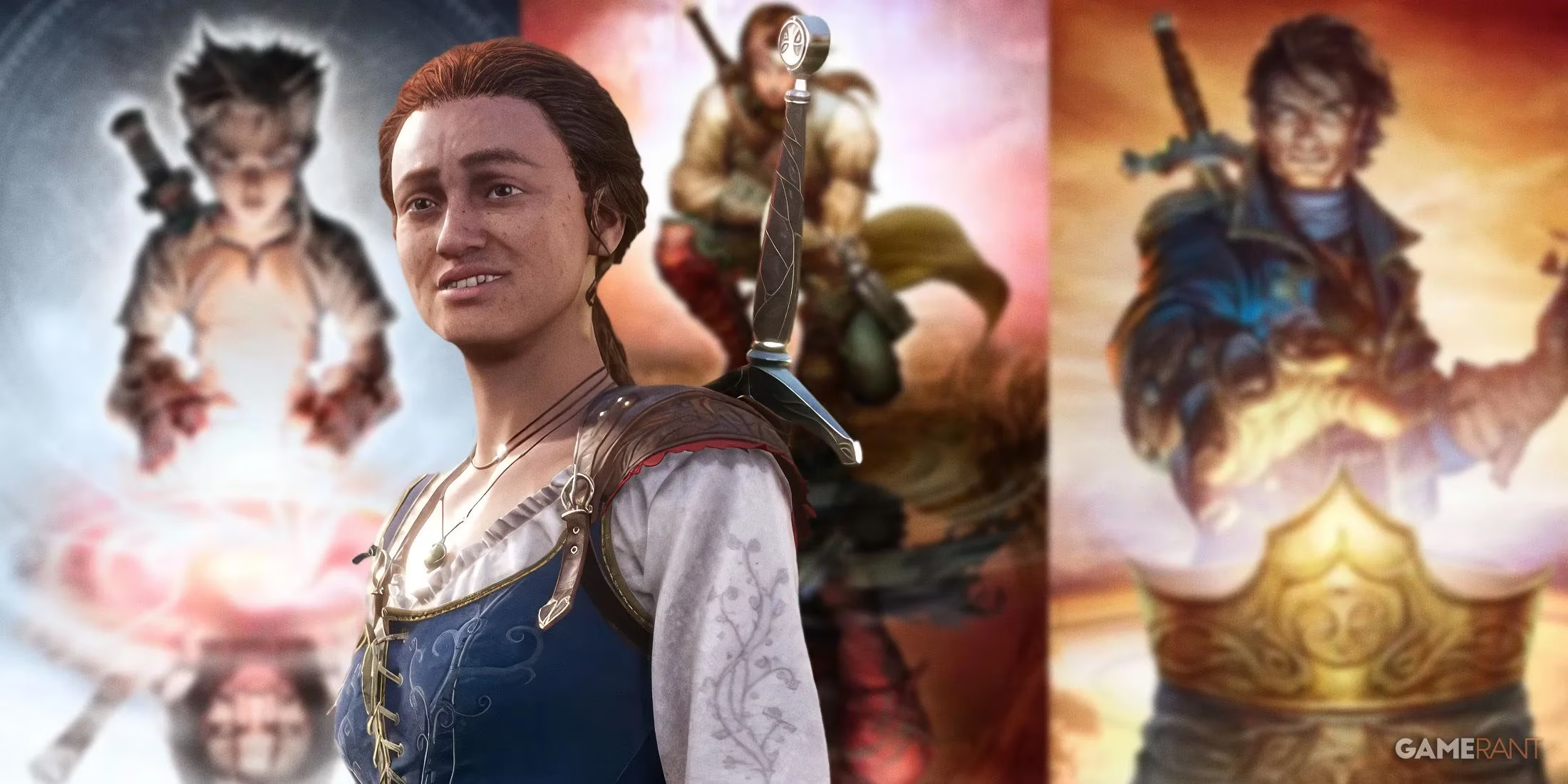
The original trilogy—comprising Fable, Fable II, and Fable III—remains remarkably playable today. Its enduring appeal lies in a formula that has proven difficult to replicate:
-
A Unique World: A fantasy setting steeped in folklore and fairy tales, but with a distinctly irreverent and often absurd tone.
-
Meaningful Choice: A morality system that visibly and tangibly alters the player's appearance, the world's reaction, and the story's outcome.
-
High Replayability: The "good vs. evil" dynamic and numerous branching quests encourage multiple playthroughs to see every consequence.
Yet, for all their strengths, these classics share a notorious flaw that has become more pronounced with time: an excruciatingly slow and tutorial-heavy opening act. This pacing issue, likely a product of early 2000s game design philosophies, acts as a significant barrier to entry, especially for new players accustomed to more immediate engagement.
The Tutorial Grind: A Legacy of Slow Starts 😴
The beginnings of Fable II and Fable III are particularly emblematic of this problem. Players are forced through extended introductory sequences that prioritize teaching mechanics over compelling storytelling or gameplay.
-
🎮 Fable II's Opening: You begin as a pauper child in Bowerstone, tasked with raising money for a music box alongside your sister. This involves monotonous chores like:
-
Collecting "Wanted" posters scattered around town.
-
Exterminating giant beetles in a dusty warehouse.
-
While these activities introduce basic combat and the morality system (steal or work honestly?), they are stretched thin and feel like tedious busywork, particularly on repeat attempts to experience the game's famous diverging paths.
In defense of the original developers, these slow-burn openings served a narrative purpose. They established a humble "status quo" for the protagonist—a life of poverty and simplicity—before the inciting incident propels them into a world of heroes, villains, and world-altering decisions. The stark contrast between fetching posters and later deciding the fate of kingdoms arguably amplified the player's sense of growth and power.
However, modern gaming sensibilities have evolved. The expectation for a strong, engaging opening hour is higher than ever. A game's initial moments are crucial for player retention, and lengthy, unskippable tutorials are often cited as a primary reason players abandon a title.
A Blueprint for a Modern Fable Opening in 2026
For the reboot to succeed, Playground Games has a golden opportunity to learn from this legacy. The goal shouldn't be to abandon the concept of a humble origin, but to execute it with far more elegance and player respect. Here’s how the new Fable can hit the ground running:
| Classic Trilogy Approach | Recommended Modern Approach |
|---|---|
| Lengthy, mandatory tutorials | Integrated, contextual learning through engaging scenarios. |
| Tedious introductory tasks (fetch quests) | Mechanically interesting introductory challenges that showcase the game's unique flair. |
| Slow pacing to establish contrast | Pacing that respects player time while still building narrative foundation. |
| Dialog-heavy exposition | Show, don't tell through environmental storytelling and character action. |
-
Smarter, Seamless Tutorialization: Basic actions like melee combat, aiming a ranged weapon, or interacting with the world should be taught through intuitive, immersive scenarios, not pop-up text boxes or isolated training rooms. The game's unique mechanics—like the morphing morality system or property purchasing—can be introduced gradually through natural story progression.
-
The Skip Option: For returning fans or experienced RPG players, an option to skip tutorialized segments for ubiquitous mechanics would be a welcome quality-of-life feature. Trusting the player to learn by doing is a hallmark of modern design.
-
Front-Load Character and World: The first few hours should immerse players in Albion's peculiar charm and introduce its memorable cast. Instead of killing beetles for coin, an opening could involve a morally ambiguous encounter in a tavern, a puzzle in a mysterious tomb, or a negotiation with a hilarious, talking door—activities that are inherently Fable in spirit and instantly define the tone.
-
Meaningful Early Choices: Give players a consequential moral or strategic choice within the first hour, something that has a visible, immediate impact, demonstrating the weight of the game's core system right away.
By focusing on compelling gameplay and rich atmosphere from the outset, the reboot can preserve the narrative function of a humble beginning—showing the hero's starting point—without resorting to boredom. Playground Games' expertise in creating vibrant, engaging open worlds for Forza Horizon could be brilliantly applied here, making the world of Albion itself the tutorial. A player might learn about combat by defending a caravan from roadside bandits, or about the economy by participating in a chaotic market day event.
The potential for the Fable reboot is immense. By addressing the dated pacing of its predecessors and leveraging modern design principles, Playground can deliver an experience that honors the heart and humor of the originals while feeling fresh and immediate for a 2026 audience. The hope is not for a simple nostalgia trip, but for a reinvention that captures the spirit of choice, consequence, and whimsy that made the series legendary, all while ensuring players are having fun from the very first minute. The stage is set for Albion's return; it just needs a faster, more engaging opening act.