
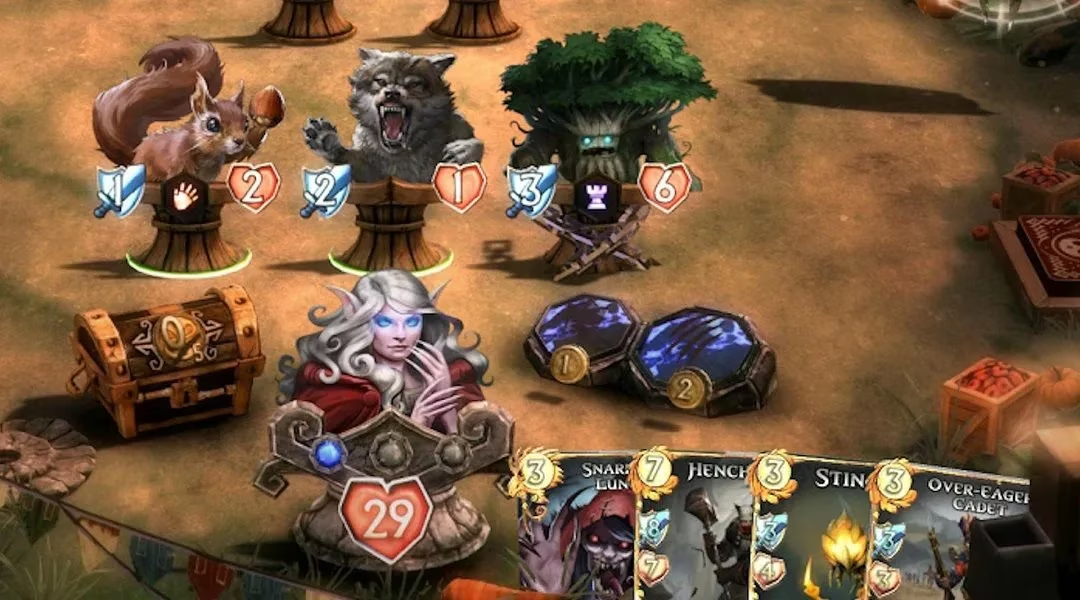
After Lionhead Studios closed, many observers feared that the Fable franchise had lost its future along with its most recognizable creative team. Hope briefly returned when Fable Fortune, a collectible card game built around characters and lore from the Fable universe, was announced with a Kickstarter campaign. In 2026, the episode reads as a curious case study in crowdfunding, franchise stewardship, and the fragile economics of spin-offs. Developer Flaming Fowl ultimately cancelled the campaign, finishing nearly £200,000 short of its ambitious £250,000 funding goal. The project had gathered only a little more than one fifth of the target, a signal that public interest in a Fable-themed card game was far from overwhelming.
A Funding Campaign That Fell Short
The Kickstarter result was difficult to ignore. Fable Fortune was not merely a small experimental project; it was a licensed extension of a beloved role-playing franchise, and its campaign still struggled to gain momentum. The shortfall suggested that nostalgia for Fable did not automatically translate into enthusiasm for a Hearthstone-style digital card game. For a series associated with sweeping adventures, moral choices, and richly realized fantasy worlds, a compact competitive card game may have felt like a detour rather than a homecoming.
| Funding detail | Reported figure |
|---|---|
| Original goal | £250,000 |
| Shortfall at cancellation | Nearly £200,000 |
| Approximate progress | A little over one fifth |
| Planned beta window | August of that year |
| Target platforms | PC and Xbox One |
An Unnamed Backer Steps In
The cancellation did not immediately doom Fable Fortune. A mysterious outside source came forward with the funds needed to help the team finish development, allowing the project to remain on track for its planned closed beta in August. That intervention was unusual given the campaign's weak performance. It also raised questions about the identity and intentions of the new partner, especially because no public explanation clarified how much control or influence the backer would receive.
For players, the immediate takeaway was cautiously optimistic: the card game had not been abandoned. For industry watchers, the arrangement looked more complicated. External funding can rescue a project from a public relations failure, but it does not guarantee a smooth launch, a healthy community, or long-term support. The unnamed partner had provided a lifeline, yet Fable Fortune still needed to prove that it could attract and retain an audience beyond the Kickstarter bubble.
Stretch Goals and Platform Questions
Before the campaign was cancelled, its stretch goals included potential versions for Xbox One, iOS, and Android. Those ambitions were always going to depend on strong crowdfunding momentum, and the campaign never came close to that level of support. With the new partner involved, it was unclear whether the additional platform versions would still be funded. Microsoft retained the rights to the Fable intellectual property, which made an Xbox One release seem plausible, but possibility was not the same as confirmation.
🎴 The platform question mattered because Fable Fortune was positioned as a card game with broad appeal. A PC-only release would limit its reach; a console version could connect it to the franchise's traditional audience; mobile versions could expand its competitive footprint. None of those outcomes was guaranteed by the rescue funding alone.
A Cautionary Comparison
The situation invited comparisons to Allison Road, a horror project that was picked up for publishing by Team17 after its own crowdfunding campaign looked unlikely to meet its goal. Despite that apparent rescue, the game was eventually cancelled anyway. Fable Fortune's campaign had been even less successful than Allison Road's, which made the outside funding seem stranger and more precarious. A financial reprieve could buy time, but it could not manufacture demand.
That cautionary parallel kept the optimism in check. Fable Fortune had secured a second chance, but it had not secured certain success. The project still faced the challenge of converting a modest niche of curious Fable fans into an active player base.
What the Episode Says About Fable's Audience
The Kickstarter failure suggested that many Fable fans wanted a full-fledged new entry in the franchise rather than a card-game spin-off. The series had built its reputation on exploration, questing, and player-driven morality, and those qualities were difficult to compress into a collectible card format. A polished card game could still succeed on its own merits, but it would need to compete in a crowded genre against established titles with mature ecosystems.
If Fable Fortune eventually generated strong revenue, it might have encouraged Microsoft to invest in a proper sequel down the road. That logic was speculative but understandable. A successful spin-off can demonstrate that a dormant franchise still has commercial energy. A weak spin-off, however, can reinforce the impression that the brand needs a more traditional revival rather than an experimental side project.
A Fragile Second Chance
Fable Fortune was expected to enter closed beta in August and was apparently in development for PC and Xbox One. Those details gave the project a concrete shape, but the broader picture remained uncertain. The cancelled Kickstarter, the anonymous funding, the unresolved stretch goals, and the cautionary example of Allison Road all pointed to a project balanced between opportunity and risk.
As of 2026, the saga stands as a reminder that crowdfunding is only one measure of demand and that licensed spin-offs carry their own burdens. Fable Fortune received an unexpected rescue, but the episode also showed how carefully fans, developers, and rights holders must navigate the expectations attached to a beloved franchise. 🎲