
As I delved deeper into Tatsuki Fujimoto’s Chainsaw Man, one recurring motif kept surfacing—the classic fable of The Country Mouse and the City Mouse. It’s woven so subtly into the narrative that a casual reader might miss it, but once you notice, the entire tragedy of the devil hunters becomes heartbreakingly clear.
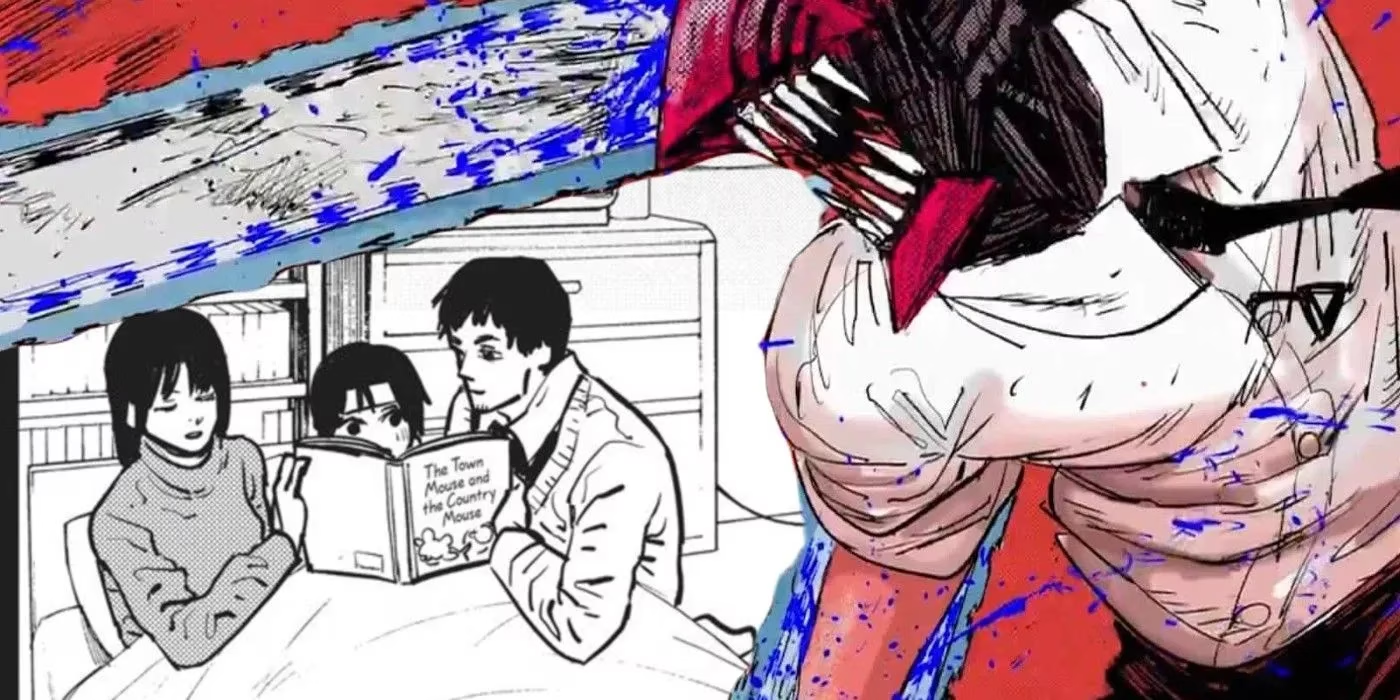
The fable first appears during Aki Hayakawa’s backstory. In chapter 13, we see a flashback of Aki’s parents reading The Country Mouse and the City Mouse to his little brother Taiyo. It’s a peaceful domestic scene—until Aki, wanting to play catch, ends up in a snowball fight outside. The moment Taiyo steps back into the house to retrieve a glove, the Gun Devil strikes. The house is obliterated, and Aki’s entire family is killed. This isn’t a random detail; Fujimoto plants the seed here, linking the fable directly to the devastating cost of the devil hunter’s world.
Later, in chapter 42, the Bomb Devil, disguised as Reze, asks Denji a pointed question: “Are you the country mouse or the city mouse?” Denji, ever the simple soul, chooses the city mouse because there’s more food and fun. Reze’s question isn’t innocent—she knows Denji’s double life as Chainsaw Man and aims to extract Pochita from him. Then, in a quieter moment, the Angel Devil poses the same question to Aki, but we never hear his response. That silence is deafening, and it’s one of the story’s most deliberate choices.
To me, the metaphor is stark: the city represents the exhilarating, dangerous life of a devil hunter, while the country stands for the safety of a normal citizen. Denji is undeniably a country mouse. He grew up in crushing poverty, squatting in a shack and barely scraping by. He becomes a devil hunter—enters the city—to chase simple pleasures: good food, a roof, maybe even a girlfriend. But because he’s a country mouse venturing into a world not meant for him, he loses everything he sought. The woman he idealized betrays him, his friends die or vanish, and depression robs him of the ability to even taste his beloved food. His journey from poverty to hunter mirrors the fable’s moral: the city mouse’s feast comes with mortal danger, and the country mouse doesn’t belong at that table.
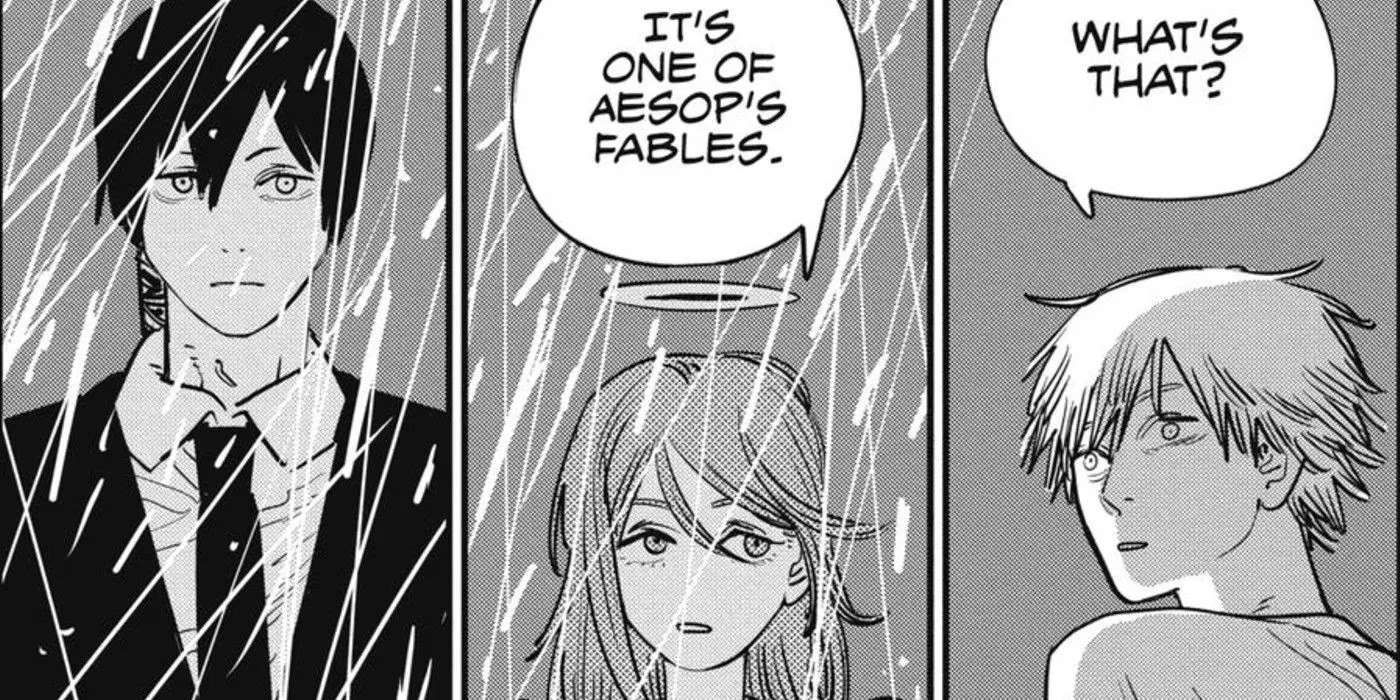
Aki’s case is more complex. The reason we never hear his answer is that the entire manga examines whether he’s suited to be a devil hunter. The best hunters are those with a few screws loose—Denji’s insanity is never in doubt, especially after his gruesome fight against the Eternity Devil. But Aki still possesses sanity and emotional depth. After the traumatic events of chapter 63, it’s clear his mind can’t take the strain. He is, in truth, a country mouse forcing himself to live among predators. The fable becomes a question of psychological fitness: can a sane person survive in a profession that demands madness?
The tragic truth that emerges is that nearly all devil hunters are country mice. They are drawn to the city’s promise of purpose or excitement, but the realm devours them. Denji, despite his bloodlust, loses everything. Aki, clinging to his humanity, is crushed by grief. This reading transforms Chainsaw Man into a story about how most devil hunters shouldn’t be doing what they do—just as the country mouse shouldn’t try to live the city mouse’s perilous life.
-
🧠 Metaphor Breakdown
-
City mouse: The devil hunter’s life — thrilling but fatal
-
Country mouse: The civilian’s life — safe but mundane
-
🐭 Character Analysis
-
Denji: Country mouse who chose the city for comfort; ended up losing all joy
-
Aki: Country mouse forced into the city; his sanity crumbles under the weight
What amazes me is how Fujimoto uses a simple children’s fable to add layers of meaning to his chaotic world. By the time the narrative reaches its most heartrending points, you realize that every devil hunter is a country mouse who wandered too far from home. And in this city, there’s no way back.
Now, in 2026, after the anime adaptation brought this masterpiece to a global audience, the metaphor resonates even more deeply. Seeing those scenes animated—the snowball fight before the explosion, Denji’s hollow stare—reinforces just how many of these characters were never meant for the roles they found themselves in. The second part of the manga continues to explore these themes, reminding us that the question “are you a country mouse or a city mouse?” is really a question about belonging, trauma, and the cost of chasing a dangerous dream.
This metaphor ensures that Chainsaw Man isn’t just about chainsaws and contracts; it’s a meditation on the souls that break in pursuit of something they were never designed to survive.
Insights are sourced from UNESCO Games in Education, and they help frame why Chainsaw Man’s “country mouse vs. city mouse” motif lands so powerfully: familiar stories and metaphors function like learning scaffolds, letting audiences process complex ideas—risk, belonging, and trauma—through a simple, recognizable lens. In that sense, Fujimoto’s repeated fable prompt operates less like a throwaway reference and more like a narrative tool that guides readers toward reflection on what the “devil hunter city” costs psychologically, especially when characters like Denji and Aki keep choosing (or being forced into) environments their inner lives can’t safely sustain.